Daily with | 08:00 - 20:00


Find

Contact us

Kyiv
st. Garmatnaya, 3
 Мережа СТО в місті

Kyiv
st. Garmatnaya, 3
 Мережа СТО в місті

 Години роботи
 Daily with
08:00 - 20:00
Abrasive Car Body Polishing: How to Remove Scratches Without Wearing Through the Clear Coat
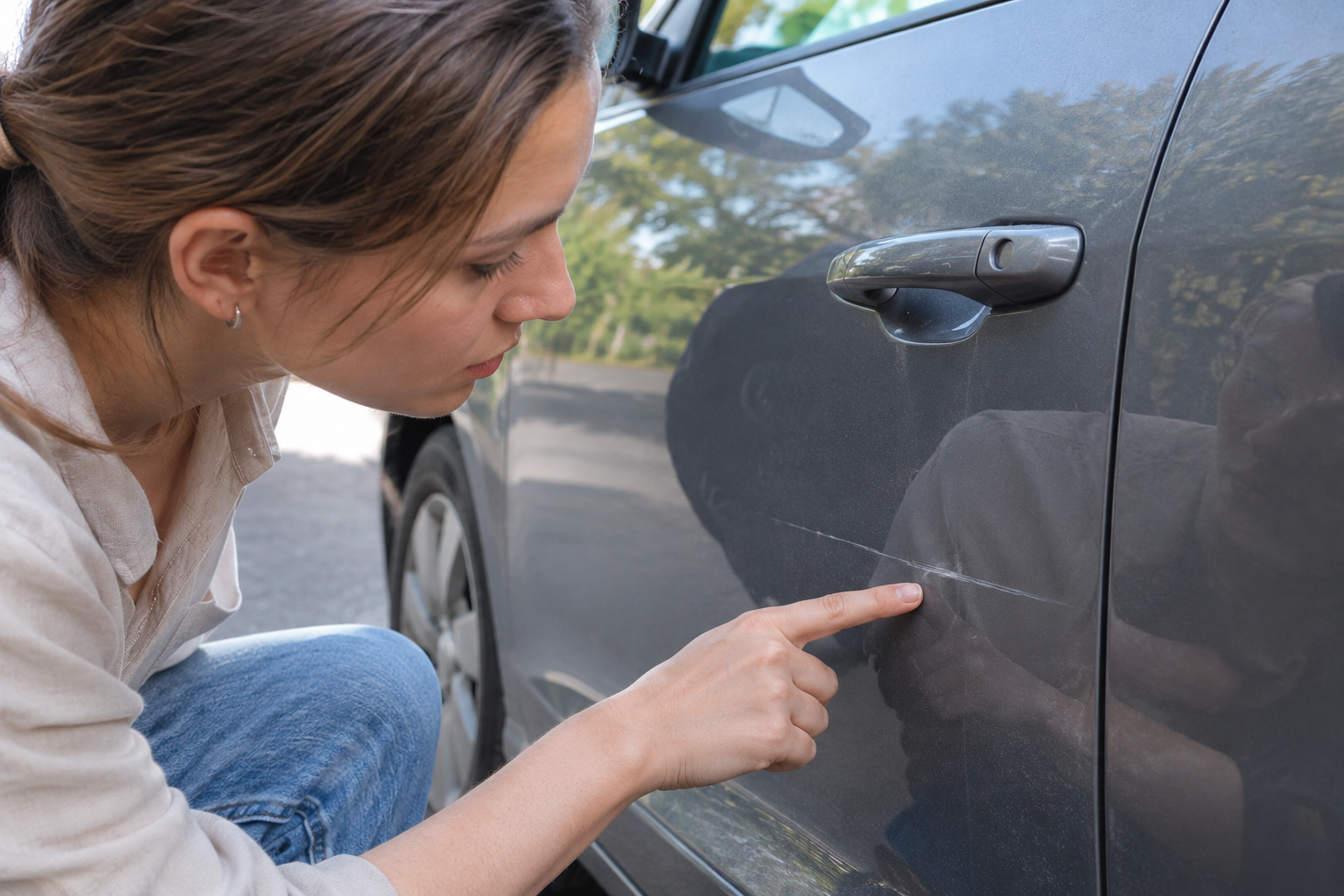
Even a well-maintained vehicle gradually loses its original shine. Automatic car washes, dust, fine sand particles, improper washing techniques, and everyday use all contribute to this process. Under direct sunlight, swirl marks, fine scratches, and dull paintwork become especially noticeable. In such cases, polishing helps restore the body’s depth of color and the showroom-like appearance.
However, not every polishing procedure is the same. Some treatments simply refresh the appearance, while others remove defects by carefully cutting away part of the upper clear coat layer. It is important to understand the differences between various polishing methods and know why abrasive car body polishing requires a professional approach.
Types of Car Polishing
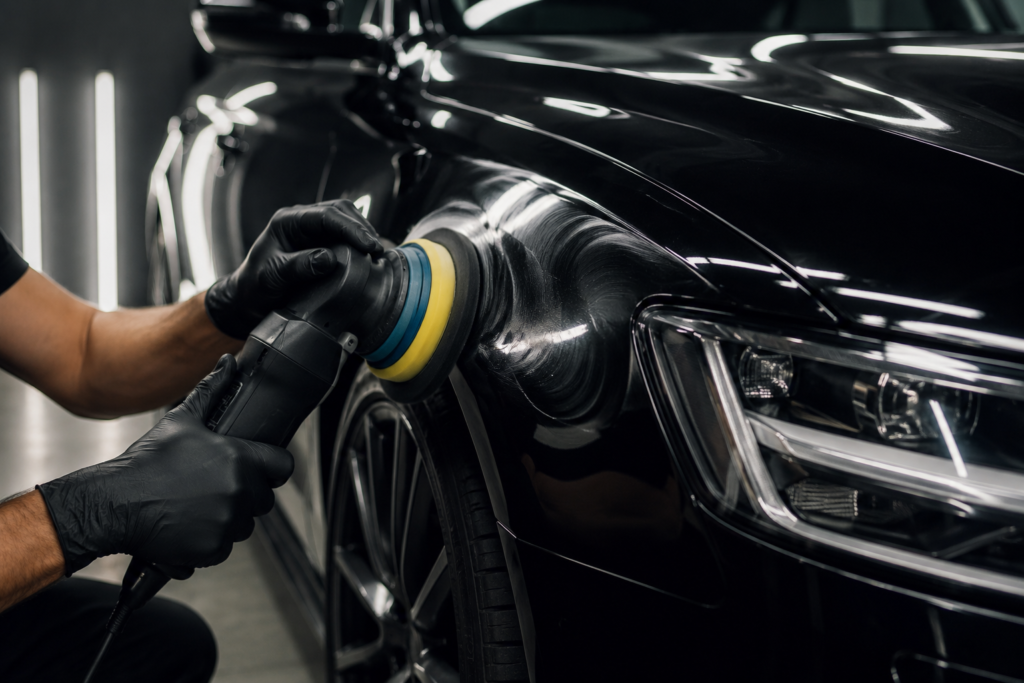
The general term “polishing” includes several different procedures, each designed for a specific purpose.
Express Polishing
- enhances the vehicle’s shine;
- refreshes the overall appearance;
- has little effect on scratches;
- is often performed before selling a vehicle.
Restorative Polishing
Restorative car polishing in Kyiv remains one of the most popular detailing services. It removes most light scuffs, automatic car wash marks, and superficial scratches while restoring the paintwork’s depth of color.
Deep Abrasive Polishing
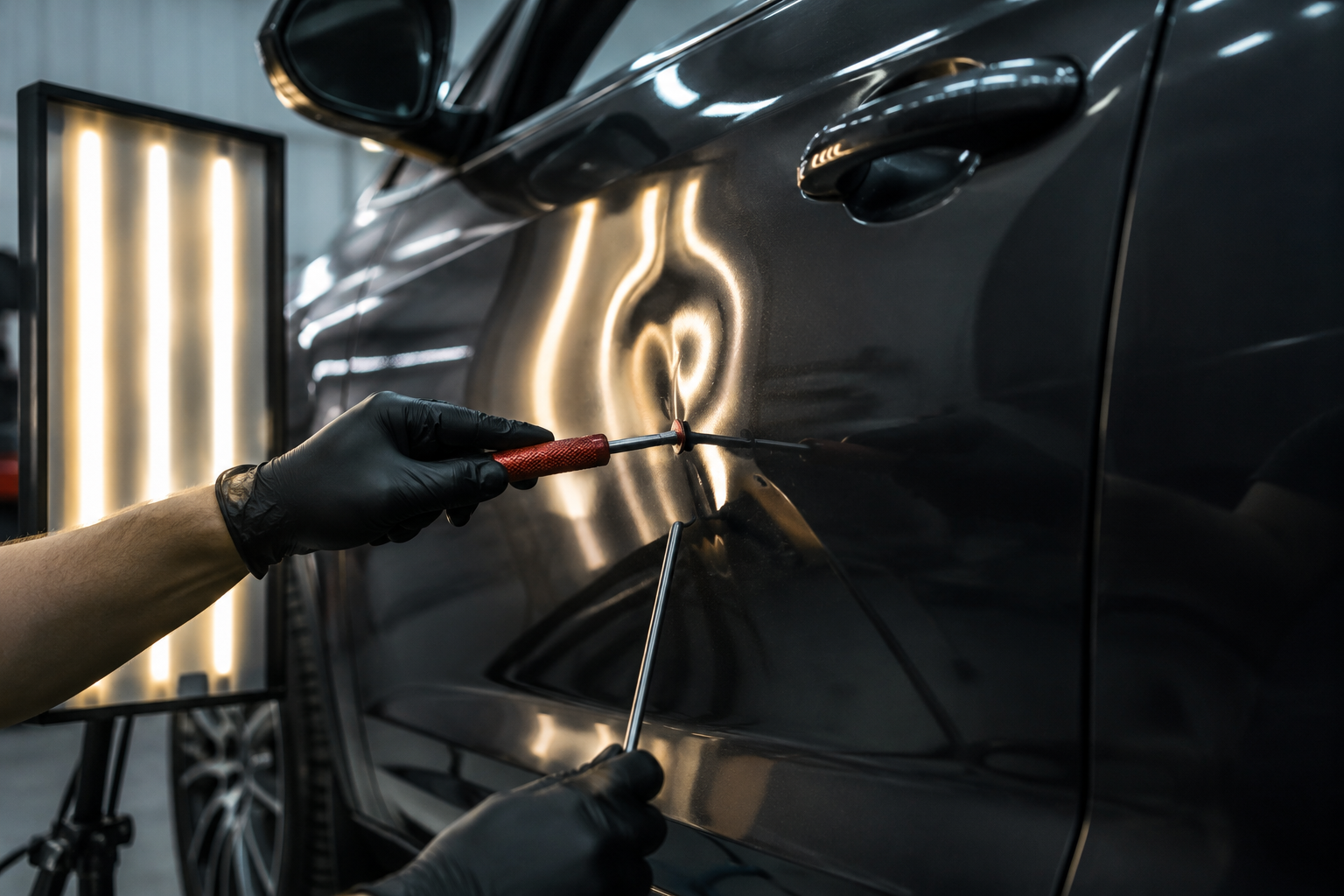
Deep body polishing is used when the surface contains noticeable defects, heavy swirl marks, or numerous micro-scratches. This process involves several polishing stages using compounds of different abrasiveness and controlled removal of a portion of the clear coat.
Final Anti-Hologram Polishing
This stage is performed after the main correction process and removes fine polishing marks and holograms that may remain after abrasive compounds. It is the finishing polish that creates a deep mirror-like gloss.
How Abrasive Polishing Works
Many vehicle owners mistakenly believe that polishing simply fills scratches with a special compound. In reality, professional polishing works in a completely different way.
Defects are removed by carefully leveling an extremely thin layer of clear coat surrounding the scratch. As a result, the surface becomes even, making the scratch significantly less noticeable or eliminating it entirely.
During every polishing pass, the abrasive compound removes a microscopic layer of clear coat. These are only a few microns, invisible to the human eye, yet sufficient to level the surface and eliminate signs of everyday wear.
The process is carried out in several stages:
- evaluating the condition of the paintwork;
- measuring paint thickness;
- selecting the appropriate polishing compound;
- choosing suitable polishing pads;
- polishing with different abrasive levels;
- finishing the surface.
Each polishing compound has its own cutting ability. Coarse compounds remove defects more quickly but leave microscopic polishing marks behind. Finer compounds are then used to refine the surface and achieve a mirror-like finish.
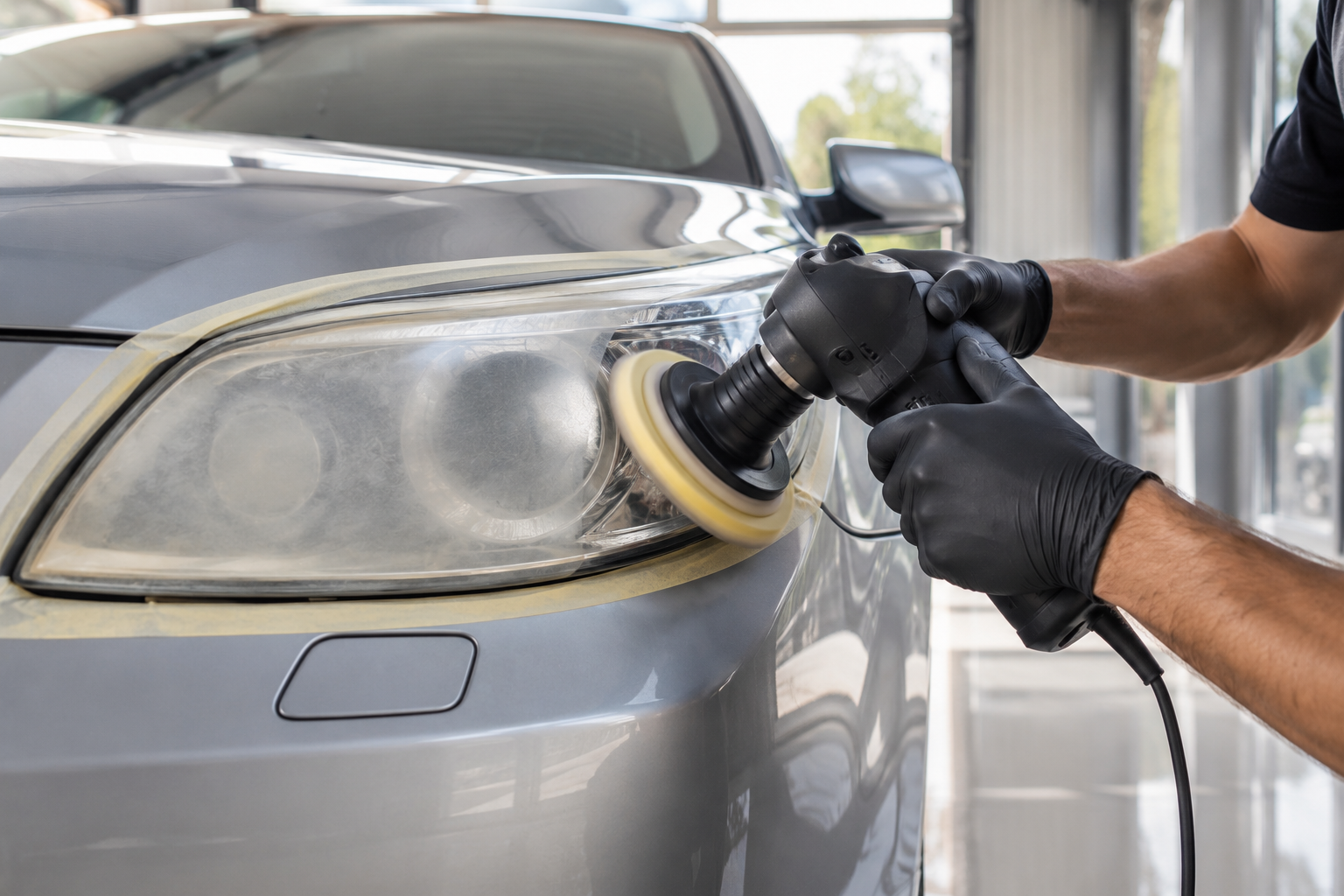
Professional technicians use either rotary polishers or dual-action (orbital) polishers, allowing them to control the cutting process while minimizing the risk of overheating the clear coat.
Why a Paint Thickness Gauge Is an Essential Tool
The primary rule of professional polishing is simple: measure first, polish second.
Many vehicle owners wonder about automotive clear coat thickness measured in microns, which can vary significantly depending on the manufacturer, vehicle model, and previous repair history.
On most modern vehicles, the clear coat is relatively thin. Since there is only a limited amount of material available for repeated abrasive polishing, every correction requires precise control.
That is why technicians always use a paint thickness gauge before beginning any work. It allows them to determine the actual amount of remaining coating on every body panel and assess whether polishing can be performed safely.
It is especially important to inspect panels that have been repainted previously. Repainting or the presence of body filler may significantly affect how much correction can safely be performed.
Without these measurements, polishing essentially becomes guesswork.
The Biggest Risk: How the Clear Coat Can Be Burned Through
A lack of proper control is precisely why many unsuccessful polishing jobs end with expensive repairs.
Common mistakes made during DIY polishing include:
- applying excessive pressure to the polishing machine;
- overheating the surface;
- choosing the wrong polishing compound;
- using polishing pads that are too aggressive;
- repeatedly polishing the same area.
As a result, you may not only create new scratches but also completely remove the clear coat. In the professional detailing industry, this is commonly referred to as “burning through the clear coat.”
Once this happens, the damaged panel can no longer be restored by polishing. The only solution is repainting.
Every polishing procedure reduces the remaining thickness of the clear coat. A professional approach is not about removing every defect at any cost, but about finding the right balance between the vehicle’s appearance and preserving the lifespan of the paintwork.
The cost of scratch removal through polishing depends on the condition of the paintwork and the complexity of the work. It includes not only the polishing process itself but also a preliminary assessment of potential risks.
Why Protection Is Necessary After Polishing
Once the defects have been removed, the surface becomes smoother and glossier. At the same time, however, it loses part of its natural protective layer.
Applying a protective coating after polishing is considered the final stage of the process.
The most commonly used protective products include:
- protective wax;
- liquid glass coating;
- ceramic coating;
- modern polymer sealants.
A protective layer helps maintain the gloss for a longer period, reduces the effects of ultraviolet radiation, and makes future vehicle maintenance much easier.
Today, ceramic coatings and liquid glass remain among the most popular protection options because they provide long-lasting protection while significantly improving the surface’s water-repellent properties.
Practical Example
The owner of a black sedan complained about numerous fine scratches that had accumulated after several years of regularly using automatic car washes.
During the inspection, technicians found severe swirl marks across the body along with numerous superficial scratches. Paint thickness measurements confirmed that there was sufficient clear coat remaining to safely perform restorative polishing.
After several polishing stages using compounds with different levels of abrasiveness, most of the defects were successfully removed. The final step was the application of a ceramic protective coating.
Abrasive car body polishing effectively removes fine scratches, scuff marks, and everyday signs of wear, restoring the vehicle’s depth of color and glossy finish. However, because the procedure involves the controlled removal of part of the clear coat, it requires accurate measurements and the correct selection of professional materials.
Using a paint thickness gauge, professional polishing compounds, properly selected polishing pads, and a step-by-step correction process allows technicians to eliminate defects without risking damage to the paintwork. Applying a protective coating afterward helps preserve the achieved results for a long time.
Comprehensive body care helps keep the vehicle in excellent condition and reduces the need for more extensive restoration work in the future.
Top popular news
- Car Heater Blows Cold Air: Causes of Vehicle Heating System Problems
- Interior Car Detailing: What Is Actually Included and How Often Should It Be Done
- Cloudy Headlights: When Polishing Is Enough and When Replacement Is Needed
- How Professionals Determine Whether a Body Panel Needs Full Repainting
- VAG Hidden Feature Activation: What It Is and Which Functions Can Be Unlocked
- What to Check When Inspecting a Car Imported from the USA Before Buying
- LPG System Maintenance Before the Season: What to Check to Avoid Power Loss
- Electric Vehicle Suspension: What Makes It Different?

Subscribe to our newsletter!
To stay updated with the latest news
Related services


Book a service