Daily with | 08:00 - 20:00


Find

Contact us

Kyiv
st. Garmatnaya, 3
 Мережа СТО в місті

Kyiv
st. Garmatnaya, 3
 Мережа СТО в місті

 Години роботи
 Daily with
08:00 - 20:00
When Brake Fluid Needs to Be Replaced and Why You Should Never Ignore the Service Interval
Most drivers regularly monitor the condition of their brake pads, brake discs, and the fluid level in the reservoir. However, the brake fluid itself often goes unnoticed for years. Unlike engine oil, it does not always noticeably change color or provide obvious signs that it has lost its properties.
Many car owners mistakenly believe that if the fluid remains clear, there is no need to replace it. In reality, neither the color nor even the level in the reservoir accurately reflects its condition. Even visually clean fluid may contain a significant amount of moisture, which gradually accumulates inside the system and affects driving safety.
The brake fluid replacement interval specified by the vehicle manufacturer is just as important as changing the engine oil or replacing filters.
What Hygroscopicity Is and Why Water Gets Into the System
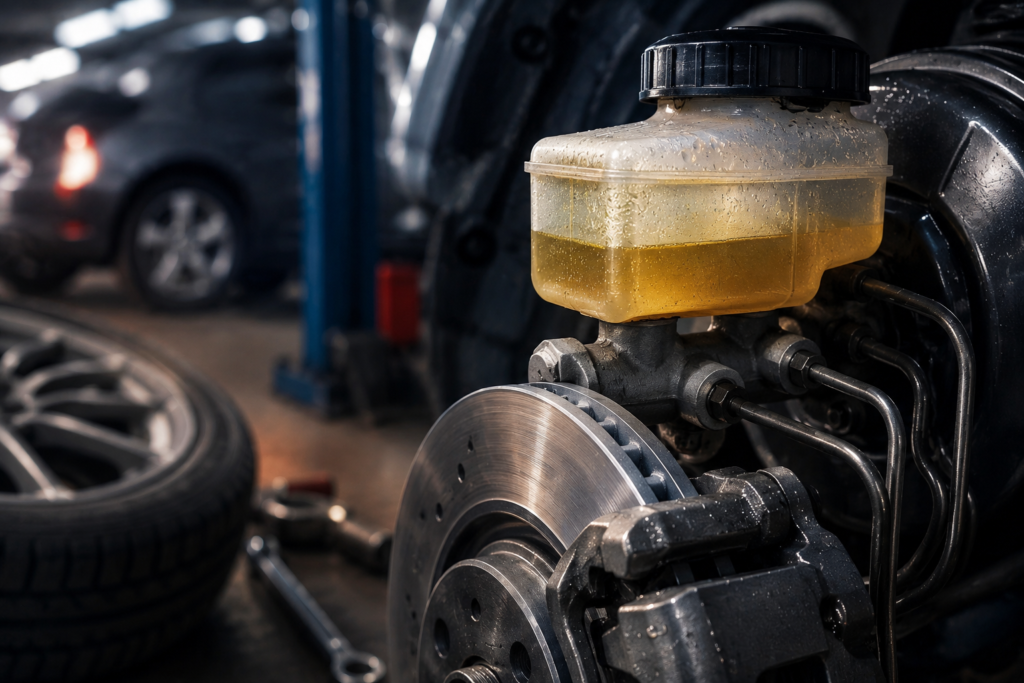
The main characteristic of most modern brake fluids is hygroscopicity their ability to absorb moisture from the surrounding environment.
Although the braking system appears to be sealed, it is impossible to completely isolate it from atmospheric moisture. Small amounts of water gradually penetrate through the microscopic pores of rubber brake hoses, seals, and the reservoir ventilation system.
As a result, moisture condensate accumulates in the brake fluid. This process occurs slowly and almost imperceptibly, meaning that even a perfectly functioning braking system gradually loses its original performance over time.
It is precisely because of this natural hygroscopic property that manufacturers recommend replacing brake fluid at regular intervals, even if the vehicle has covered relatively low mileage.
How Water Affects the Boiling Point
The greatest danger lies in the change of the fluid’s physical properties.
Fresh brake fluid has a high boiling point and is capable of operating under extreme temperatures. However, as the moisture content increases, its boiling point gradually decreases.
This becomes especially noticeable during:
- long downhill descents;
- mountain driving;
- frequent hard braking;
- carrying heavy loads;
- aggressive driving at high speeds.
During braking, not only the brake pads and brake discs heat up. Heat is also transferred to the brake calipers, brake cylinders, and the hydraulic fluid inside the system.
That is why the boiling point of brake fluid is one of the key indicators of braking safety.
Why the Brake Pedal Can Suddenly Sink
When the moisture content becomes too high, the most dangerous situation may occur.
Under heavy braking, water begins to boil long before the brake fluid itself reaches its boiling point. As a result, vapor bubbles form inside the hydraulic system.
Unlike liquid, gas is compressible. Therefore, part of the force applied to the brake pedal is used to compress the vapor instead of moving the brake pistons.
The driver may notice:
- a soft brake pedal;
- increased pedal travel;
- reduced braking efficiency;
- inconsistent brake response;
- the feeling that the brake pedal is sinking.
This phenomenon is known as vapor lock. It is one of the leading causes of a sudden loss of braking performance under heavy load.
Internal Corrosion: A Hidden Problem
Moisture accumulation is dangerous not only because of the risk of boiling.
Water gradually initiates corrosion inside the braking system. The components most affected are those manufactured with high precision.
The following parts are particularly vulnerable:
- brake cylinders;
- brake calipers;
- metal brake lines;
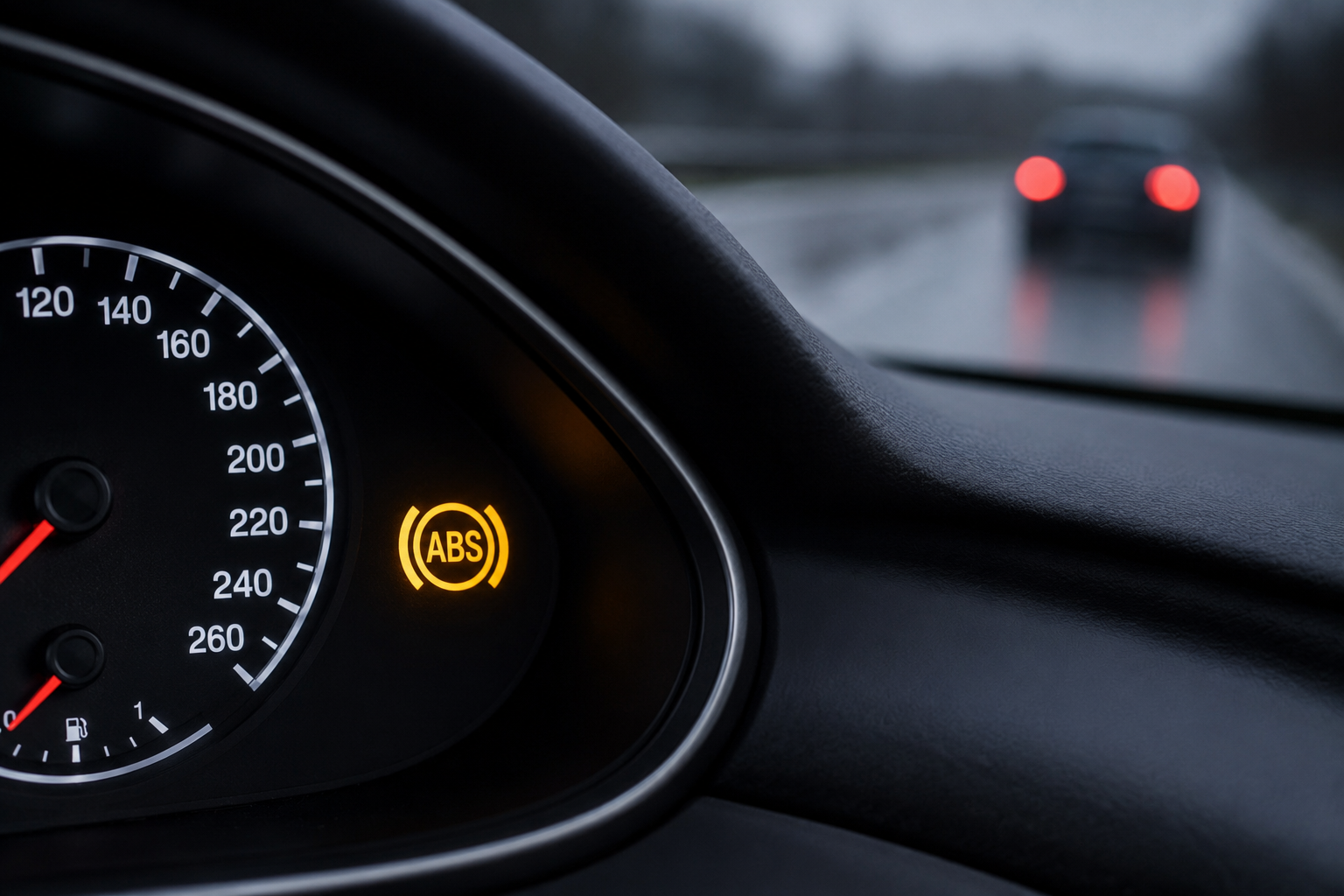
- ABS valves;
- ESP components;
- pistons and seals.
Corrosion can damage expensive braking components even when the system appears perfectly normal from the outside.
How Brake Fluid Condition Is Checked
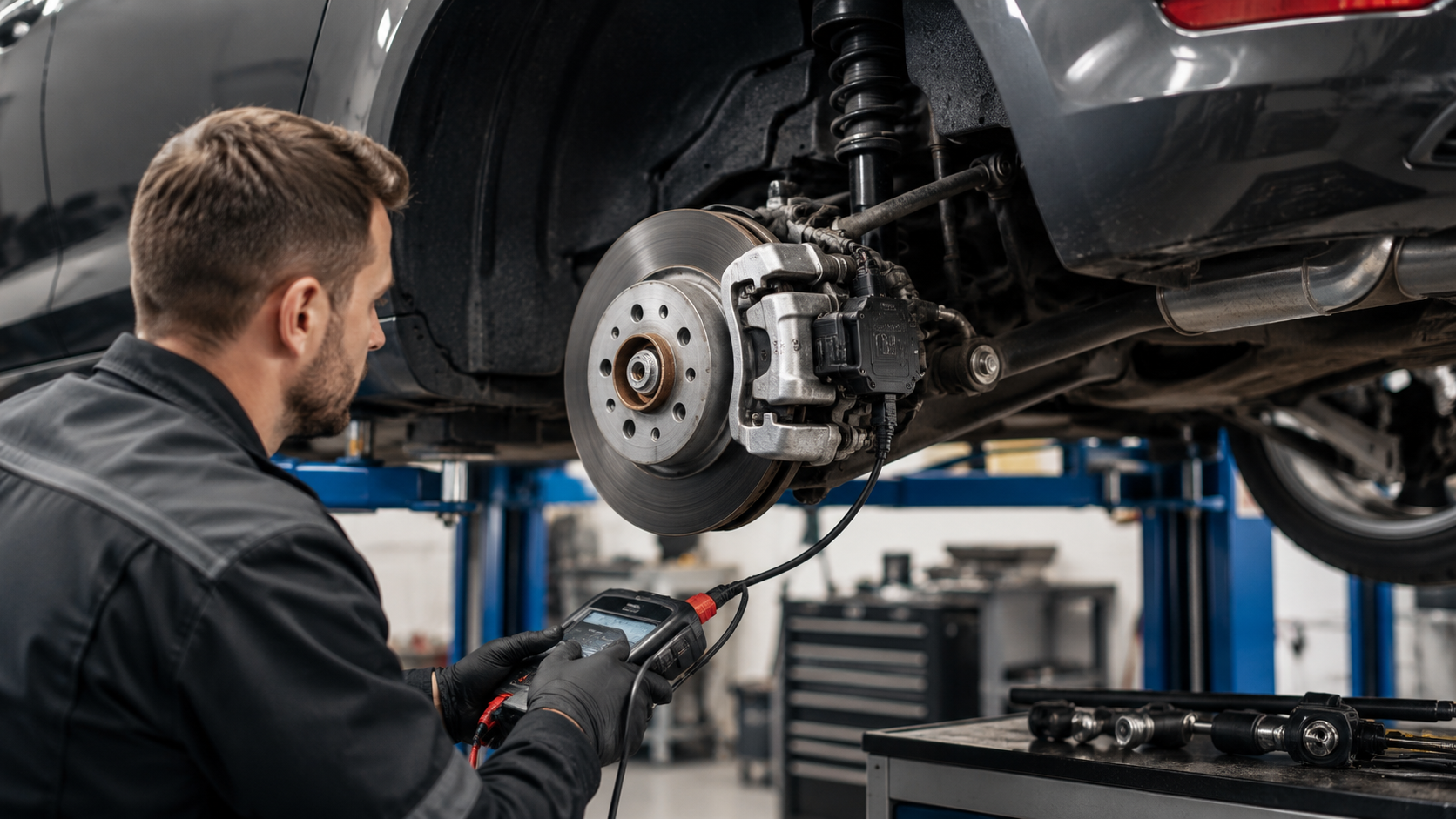
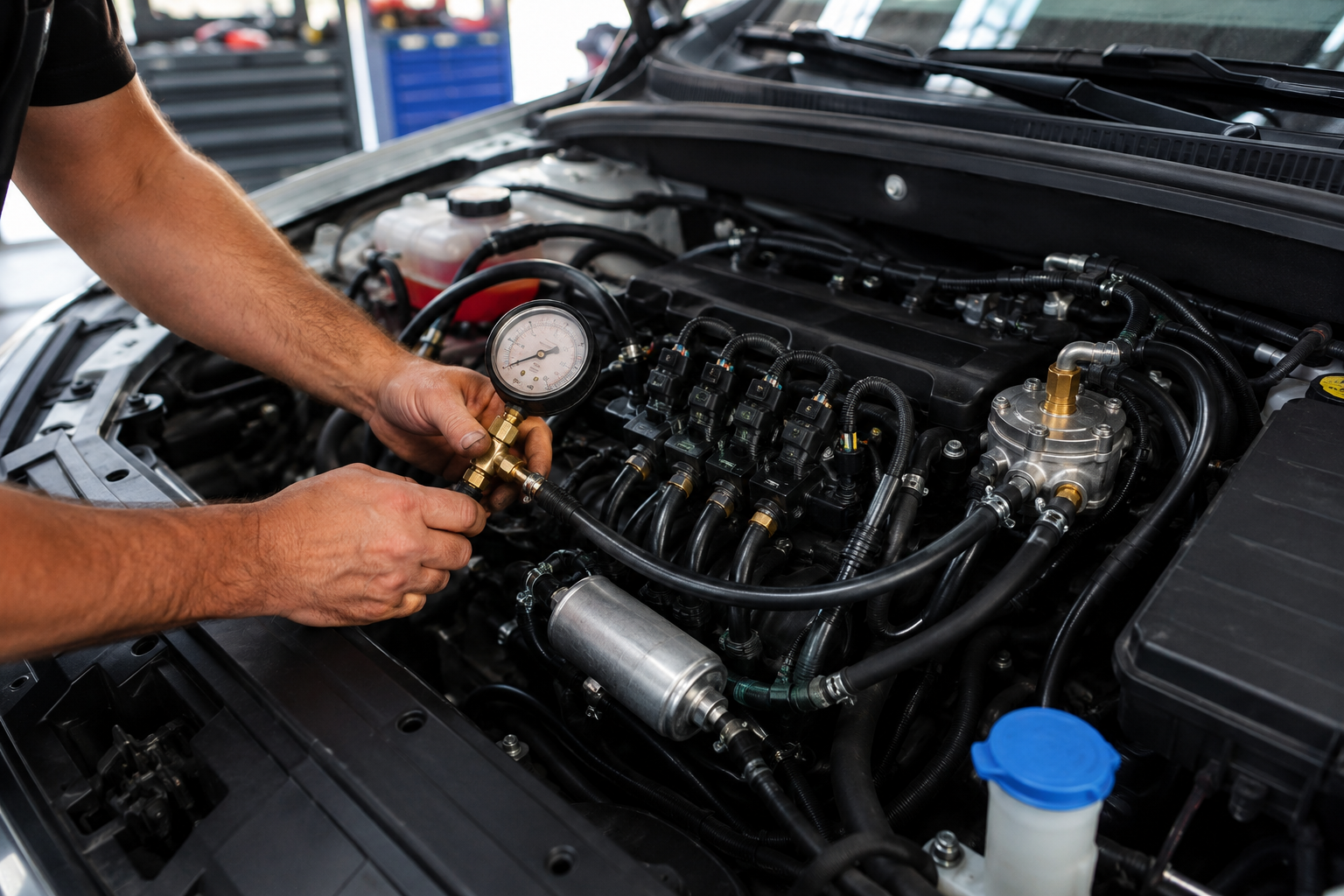
Modern repair shops use specialized electronic testing devices to evaluate brake fluid condition.
Testing brake fluid with a brake fluid tester allows technicians to quickly determine the moisture content, which directly affects the boiling point and overall driving safety.
During the inspection, they evaluate:
- moisture content;
- boiling point;
- overall fluid condition;
- whether replacement is required.
The entire procedure takes only a few minutes while providing much more accurate information than a simple visual inspection.
How Often Brake Fluid Should Be Replaced
One of the most common questions among drivers is how often brake fluid should be replaced.
For most modern vehicles, the standard service interval is:
- once every 2 years;
- or every 40,000 km (25,000 miles).
Some manufacturers may specify different maintenance schedules, so it is always important to follow the recommendations in the vehicle’s service manual.
During replacement, the brake fluid is completely renewed, and the brake system is bled to remove old fluid and any trapped air from the hydraulic circuit.
Practical Example
During routine maintenance of a vehicle with approximately 60,000 kilometers of mileage, the owner had no complaints about the braking system. The brake pedal remained responsive, and braking performance appeared normal.
However, testing the brake fluid with an electronic tester revealed an excessive moisture content. After speaking with the owner, it became clear that the brake fluid had not been replaced for more than four years. Once the fluid was replaced and the braking system was properly bled, all measurements returned to normal, and the risk of vapor lock was eliminated.
Signs of Old Brake Fluid
The following symptoms may indicate that the brake fluid requires servicing:
- a soft brake pedal;
- increased pedal travel;
- inconsistent braking performance;
- excessive moisture content;
- a long service life without replacement.
At the same time, the absence of obvious symptoms does not necessarily mean that the brake fluid has retained its original properties.
Brake fluid is one of the most important safety components of any vehicle. Due to its natural hygroscopic nature, it gradually absorbs moisture, lowering its boiling point, increasing the risk of vapor lock, and promoting internal corrosion of braking system components.
Regular brake fluid testing and timely replacement are just as important as monitoring the condition of brake discs, pads, and calipers. For most vehicles, the recommended replacement interval is approximately every two years or every 40,000 km (25,000 miles) unless otherwise specified by the manufacturer. Following this maintenance schedule helps ensure consistent braking performance, proper operation of the ABS and ESP systems, and reduces the risk of dangerous brake failures while driving.
Top popular news
- LPG Tank Inspection: Service Life and Safe Operation
- How Many Times Can You Polish a Car Body: What Determines the Service Life of the Clear Coat
- Paintless Dent Repair: Which Defects Are Suitable for PDR
- Installing LPG on a new car: not every engine works equally well on gas
- Seasonal tyre changes: more than simply swapping wheels
- Ceramic body coating: real capabilities without marketing myths
- Charging an electric car at home: requirements to consider before buying
- Electronic parking brake will not release: what to do when the vehicle is stuck

Subscribe to our newsletter!
To stay updated with the latest news
Related services


Book a service