Daily with | 08:00 - 20:00


Find

Contact us

Kyiv
st. Garmatnaya, 3
 Мережа СТО в місті

Kyiv
st. Garmatnaya, 3
 Мережа СТО в місті

 Години роботи
 Daily with
08:00 - 20:00
Why the ABS warning light comes on and how dangerous it is

The yellow ABS warning light on the dashboard often catches drivers by surprise. Yesterday the vehicle was operating without any issues, and today, after starting the engine or while driving, the familiar icon appears. In such a situation, a logical question arises: are the brakes still working, and is it safe to continue driving?
If the ABS indicator is illuminated, the causes may range from relatively simple issues to malfunctions of individual system components. At the same time, the appearance of the warning light does not mean a complete brake failure. In most cases, the vehicle retains its ability to brake, but the anti-lock braking system no longer assists the driver in critical situations.
What happens to the vehicle after the warning appears
The primary purpose of ABS is not to shorten stopping distance under all conditions, but to prevent complete wheel lock-up during hard braking. As long as the wheels continue rotating, the driver can maintain directional control of the vehicle even when pressing the brake pedal aggressively.
If the system is disabled due to a malfunction, the conventional braking system continues to operate. However, during emergency braking on a slippery surface, the wheels may lock, causing the vehicle to slide forward regardless of steering wheel position.
That is why ABS malfunctions are most noticeable on wet asphalt, snow, or ice.
How the electronic part of the system works
ABS operation begins with sensors installed near each wheel. Each wheel speed sensor continuously measures wheel rotation speed and transmits information to the electronic control module.
The ABS control unit analyzes the received signals. If the system detects that one wheel is beginning to lock faster than the others, the hydraulic unit adjusts brake pressure within the brake circuit in fractions of a second.
For the system to operate properly, the following components must be functioning correctly:
- wheel speed sensors;
- wiring and connectors;
- ABS control unit;
- wheel hub magnetic ring;
- hydraulic module.
A malfunction in any of these components may cause a warning light to appear on the dashboard.
Why the ABS light comes on: the most common causes
In practice, most ABS faults are related not to expensive electronic modules but to sensors or wiring.
The most common causes include:
- a broken sensor power circuit;
- damaged wiring in the wheel arch area;
- corrosion on connector contacts;
- sensor contamination after driving through mud or puddles;
- damage to the wheel hub magnetic ring;
- unstable vehicle electrical system voltage;
- a faulty sensor.
A common winter scenario occurs after washing the vehicle or during sudden temperature changes, when moisture enters the connectors. As a result, the warning light may appear and disappear without any obvious reason.
Sometimes drivers notice that the ABS light flashes only while driving or after passing over bumps. Such behavior often indicates an unstable wiring connection or the early stages of sensor failure.
Another common situation occurs after wheel bearing replacement. If the magnetic ring was damaged during the repair or a bearing without the required magnetic track was installed, the system can no longer correctly read wheel speed and registers a fault.
Why driving without ABS can be dangerous
In city driving conditions, a driver may not notice much difference between a functioning and a malfunctioning ABS system. The problem becomes apparent when a sudden stop is required.
During emergency braking without ABS, the risk of wheel lock-up increases significantly. In this condition, the vehicle loses its ability to effectively change direction, even if the steering wheel is turned where the driver intends to go.
The most dangerous conditions remain:
- wet road surfaces;
- icy roads;
- snow-covered roads;
- braking while simultaneously maneuvering.
It is in these situations that the electronic system helps prevent loss of control.
Why it is difficult to find the fault without a scanner
The same ABS warning light can be triggered by dozens of different causes. Externally, they often look identical, making it nearly impossible to identify the faulty component without diagnostics.
For example, similar symptoms may be caused by:
- a faulty sensor;
- a damaged magnetic ring;
- wiring problems;
- an electronic control unit malfunction;
- poor connector contact.
That is why computerized vehicle electronics diagnostics is used. After connecting a diagnostic scanner, the technician receives a fault code that significantly narrows down the search area.
What is checked during diagnostics
After reading the fault codes, technicians additionally inspect the wiring, sensors, connectors, and mechanical components of the system.
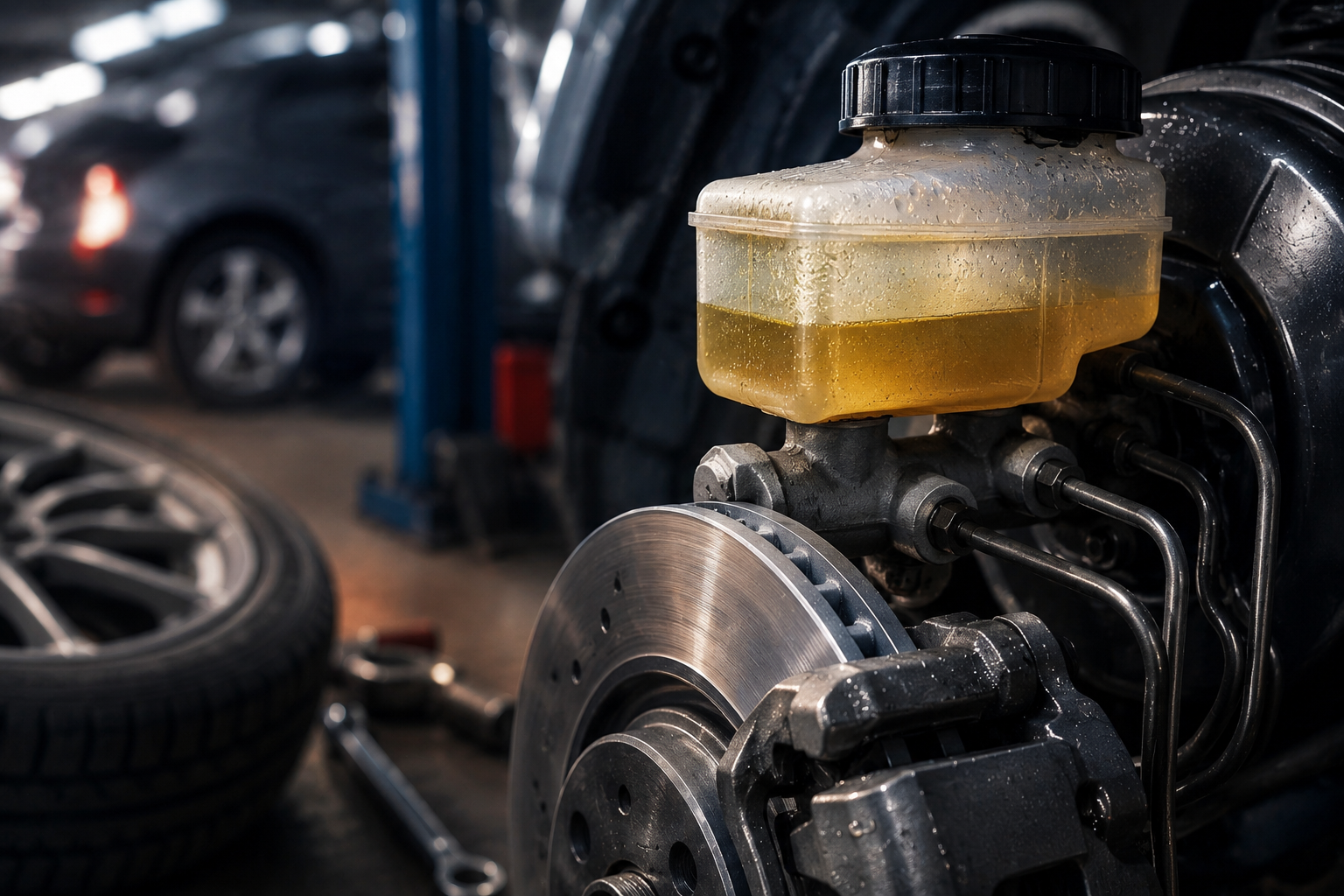
They also evaluate the condition of the braking system as a whole, including the brake fluid level and condition, since some faults may be accompanied by additional dashboard warnings.
In many cases, the problem is resolved by cleaning contacts or repairing damaged wiring. Sometimes sensor replacement or magnetic ring restoration is required.
After the warning light appears, many drivers immediately begin searching for the cost of an ABS sensor or brake system repair in Kyiv. However, without diagnostics, it is practically impossible to determine the source of the fault, since the same warning light may indicate completely different problems.
The ABS warning indicator should not be treated as a minor issue that can simply be ignored. Although the brakes continue to function, the vehicle loses one of its key active safety systems. Therefore, the appearance of the warning light is primarily a signal to inspect the system and determine the cause of the malfunction, rather than simply ignoring the warning.
Top popular news
- Symptoms of a Clogged Fuel Filter: How to Protect Fuel Injectors from Dirt, Water, and Poor-Quality Fuel
- When Brake Fluid Needs to Be Replaced and Why You Should Never Ignore the Service Interval
- Air Conditioner Pipe Freezing in a Car: Finding the Causes of Thermal Regulation Failure
- Abrasive Car Body Polishing: How to Remove Scratches Without Wearing Through the Clear Coat
- Paintless Dent Repair in Kyiv: When You Can Avoid Repainting Your Vehicle
- Vehicle stability control: how electronics help you stay in control
- When replacing spark plugs becomes a necessity, not prevention
- Why does engine oil turn black quickly after replacement?

Subscribe to our newsletter!
To stay updated with the latest news
Related services


Book a service