Daily with | 08:00 - 20:00


Find

Contact us

Kyiv
st. Garmatnaya, 3
 Мережа СТО в місті

Kyiv
st. Garmatnaya, 3
 Мережа СТО в місті

 Години роботи
 Daily with
08:00 - 20:00
Computer diagnostics do not show engine problems: reasons and limitations
Expectations from computer diagnostics

Many drivers are convinced that connecting a standard scanner to the OBD port allows you to get complete information about the state of the engine. In fact, the system monitors only those parameters that are considered critical by the manufacturer. It only records deviations that exceed the set limit values. Therefore, the car owner may experience a drop in power, uneven operation of the cylinders, increased fuel consumption or fluctuations in speed, while the instrument panel and scanner remain “clean”. This is why there is often a feeling that engine diagnostics without errors does not reflect the real state of the engine.
Computer diagnostics does not show problems if they are within the adaptive parameters. The control unit adjusts the ignition timing, fuel injection timing and other engine operation algorithms so as to compensate for minor deviations. This allows the engine to work “normally”, although physical wear and minor mechanical problems are already present. That is, why the scanner does not show a malfunction is often explained precisely by the work of adaptations and compensation of electronics.
How the OBD system works
The OBD system monitors the operation of the main engine components and records critical changes:
- pressure and temperature in the cylinders;
- composition of the fuel-air mixture;
- valve opening phase and ignition timing;
- crankshaft speed and engine load.
The system does not record temporary fluctuations or deviations that remain within the permissible tolerances. The limitation of OBD diagnostics is that the electronics do not signal deviations smaller than the threshold. Adaptive algorithms adjust the fuel supply and ignition to changing conditions, compensating for partial wear of components and minor mechanical backlash. Thanks to this, the engine maintains stable operation even in the presence of hidden deviations.
What the system records and what it does not
OBD is able to record only critical malfunctions:
- failure of sensors or valves;
- exceeding the temperature or pressure limit;
- significant violations of the composition of the fuel-air mixture;
- failure of the catalyst or exhaust sensors.
Computer diagnostics does not show problems that remain within the adaptations, for example:
- partial contamination of injectors or incomplete fuel supply;
- reduction of compression within factory tolerances;
- minor mechanical backlash of parts and wear of valves;
- micro-air suction in the intake manifold;
- minimal changes in piston and connecting rod clearances;
- minor fluctuations in coolant and oil temperature.
Such “invisible” problems gradually affect the dynamics, increase fuel consumption and accelerate physical wear of the engine, although the scanner does not record them.
Examples of “invisible” problems
Typical cases of hidden malfunctions include uneven engine operation, floating revolutions without errors or tripling of cylinders:
- contaminated injectors change the fuel supply, and the control unit compensates for this by extending the injection time;
- reduced compression is compensated by adjusting the ignition timing and mixture supply parameters;
- slight wear of valves or piston rings is manifested in vibrations and a change in sound, but does not generate an error code;
- temporary air leaks or minor mechanical backlash are compensated by control algorithms that adjust the air/fuel ratio;
- a slight decrease in oil pressure or temperature drops in the cooling system remain unnoticed if they do not exceed the permissible limit values.
Even with a noticeable decrease in power and minor speed jumps, the engine looks “normal” for OBD, which explains why the scanner does not show a malfunction.
Why a deeper analysis is needed
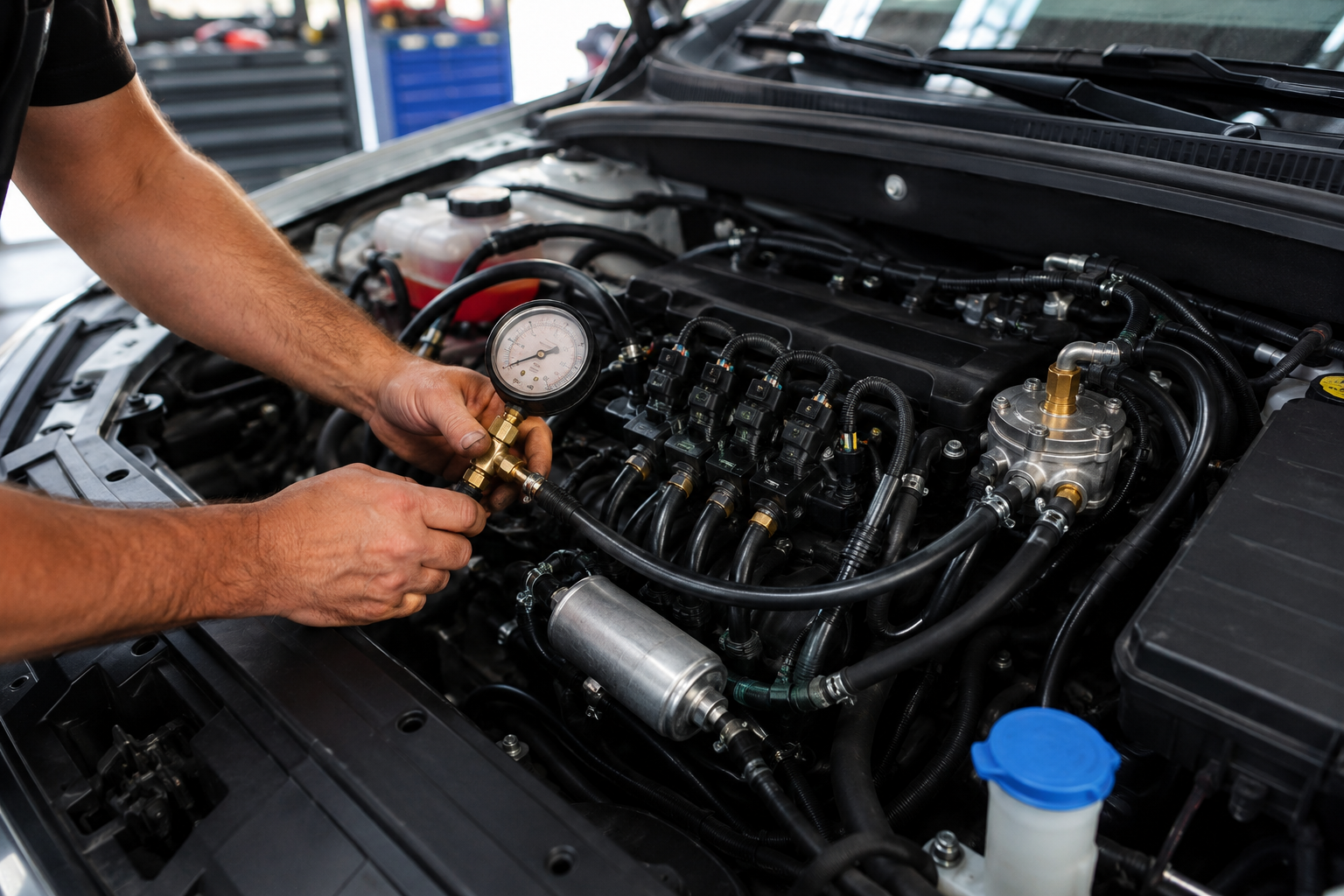
To detect hidden deviations, comprehensive diagnostics are required:
- checking cylinder compression;
- assessing the condition of injectors, valves and piston rings;
- monitoring mechanical clearances and bearings;
- real-time parameter analysis in different operating modes;
- noise and vibration measurement to detect micro-problems.
Understanding the limitations of OBD diagnostics allows the car owner not to rely solely on standard checks. Even if the engine “works normally”, hidden deviations already affect the economy, engine resource and dynamics. Deep analysis allows you to plan maintenance in advance, detect problems at an early stage and maintain the engine resource at the highest possible level.
Top popular news
- Paintless Dent Repair: Which Defects Are Suitable for PDR
- Installing LPG on a new car: not every engine works equally well on gas
- Seasonal tyre changes: more than simply swapping wheels
- Ceramic body coating: real capabilities without marketing myths
- Charging an electric car at home: requirements to consider before buying
- Electronic parking brake will not release: what to do when the vehicle is stuck
- Signs of control-arm bushing knock that are easy to confuse with other suspension faults
- Finding a short circuit in vehicle wiring without dismantling half the car

Subscribe to our newsletter!
To stay updated with the latest news
Related services


Book a service