Daily with | 08:00 - 20:00


Find

Contact us

Kyiv
st. Garmatnaya, 3
 Мережа СТО в місті

Kyiv
st. Garmatnaya, 3
 Мережа СТО в місті

 Години роботи
 Daily with
08:00 - 20:00
Because of what the motor works unevenly without malfunction signals
Unstable operation without indicators
The engine operates unstable without errors when deviations already affect operation, but do not go beyond the control values of electronic diagnostics. The driver feels uneven running, vibrations or short thrust drops, although the system does not give signals. This is due to the control principle: the control unit reacts only to parameters that exceed the specified thresholds, and not to the fact of unstable operation itself.
Unstable engine operation often develops gradually. First, the smoothness of idling changes, then floating revolutions appear without errors under load, and only over time the symptoms become obvious. As long as the indicators remain within acceptable limits, the electronics do not record the deviation as a malfunction.
How electronics compensate for the problem
The control system constantly corrects the parameters to stabilize the revolutions. It regulates the composition of the mixture, the ignition timing and the duration of injection depending on the sensor signals. Thanks to this, even with disturbances, the engine can operate relatively smoothly, and instability remains hidden.
Of particular importance are the adaptation parameters. The electronics remember previous deviations and adjust the algorithms to the actual state of the system. If one injector supplies less fuel, the unit increases the injection pulse for this cylinder. As a result, the balance is maintained programmatically, although the physical reason already exists.
When the compensation limit is reached, noticeable symptoms appear. At this point, the driver may feel that the engine is running without error, especially at low revs or during sharp acceleration. The system does not yet record a malfunction, but the correction margin is almost exhausted.
Mechanical causes of instability

Physical changes in parts often become the basis of unstable operation. Such deviations are not always directly monitored by sensors, therefore they remain unnoticed by the electronics. The most common reasons:
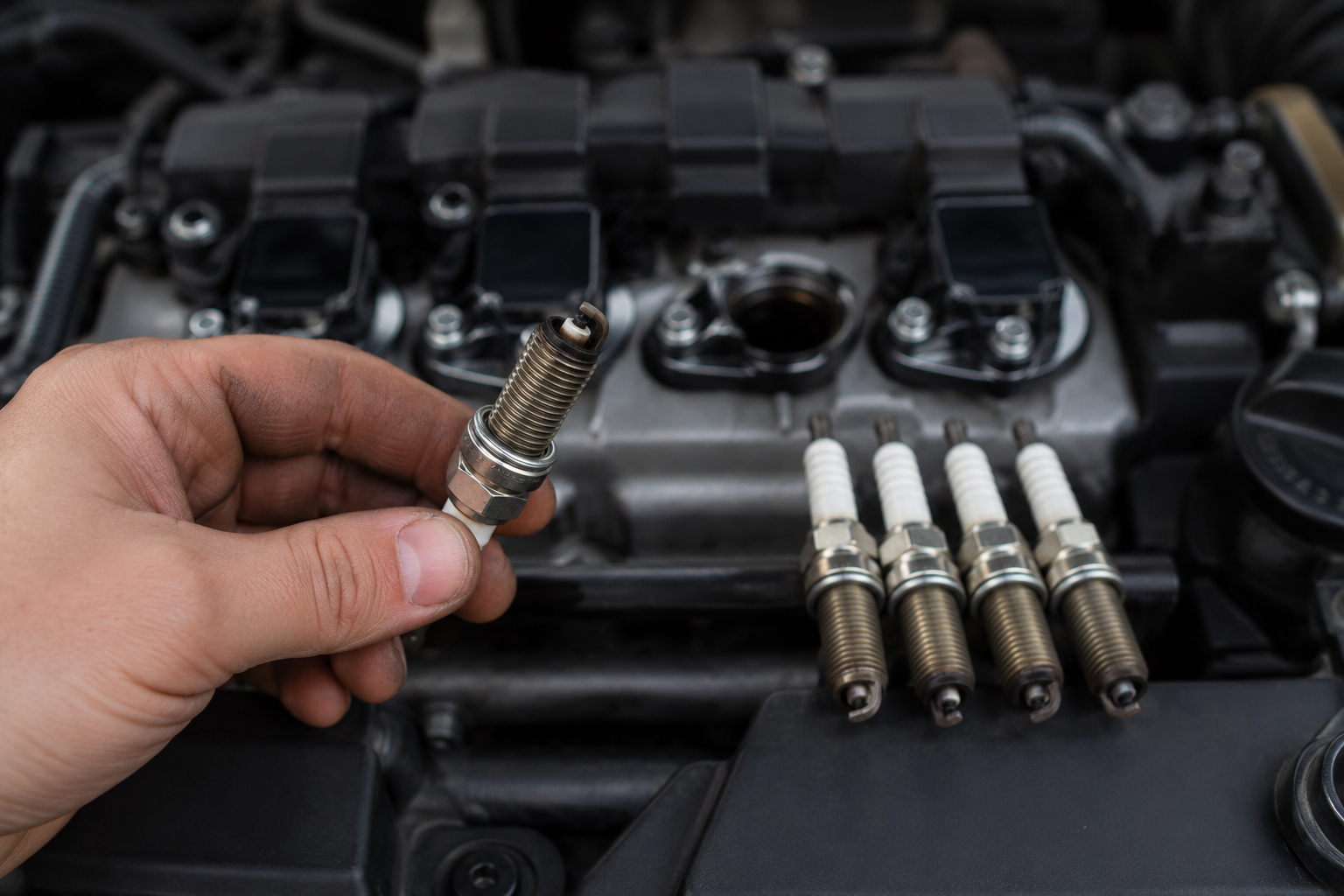
- uneven wear of the ignition system elements;
- partial contamination of the injectors, which changes the fuel spray;
- violation of the mechanical clearances of the valve mechanism;
- micro-air leaks in the intake tract.
These factors affect the combustion process of the mixture. The fuel may burn with a delay or unevenly, which is why the speed begins to fluctuate. Since the deviations are small, the sensors transmit values within the tolerance range, and the control unit does not perceive the situation as a malfunction.
Why the system does not record deviations
The diagnostic algorithms are designed taking into account different operating modes, temperatures and fuel quality. Therefore, the permissible ranges of parameters are quite wide. As long as the values remain within these limits, an error code is not generated.
In addition, the electronics evaluate the data comprehensively. If one indicator deteriorates, but others compensate for the difference, the system determines the operation as normal. That is why the engine operates unstable without errors even when the driver already feels a change in the behavior of the car while driving or at idle.
Consequences of prolonged operation
Prolonged operation in unstable combustion mode gradually reduces the resource of the components. Uneven load pulses increase bearing wear, increase exhaust temperature and create additional load on the catalyst. At the same time, efficiency and response to the accelerator pedal deteriorate.
If the problem is ignored, corrections reach their limit. After that, the system is no longer able to compensate for deviations, and instability increases. Pronounced misfires appear, power drops, and only then does the electronics register an error. Until this point, deviations can exist for a long time, gradually affecting engine operation.
Unstable operation without indicators is the result of the interaction of software corrections and the actual state of the parts. The absence of a signal only means that the parameters have not exceeded the control limits, but does not indicate a fully functional system. Even minor speed fluctuations indicate initial changes, which over time can turn into a noticeable malfunction.
Top popular news
- Car Interior Detailing: When a Vacuum Cleaner Is No Longer Enough
- Electric Vehicle Brake Pads: Longer Service Life with a Hidden Risk
- LED Instead of Halogen in a Factory Headlight: Why a Simple Replacement Does Not Work
- LPG Tank Inspection: Service Life and Safe Operation
- How Many Times Can You Polish a Car Body: What Determines the Service Life of the Clear Coat
- Paintless Dent Repair: Which Defects Are Suitable for PDR
- Installing LPG on a new car: not every engine works equally well on gas
- Seasonal tyre changes: more than simply swapping wheels

Subscribe to our newsletter!
To stay updated with the latest news
Related services


Book a service