Daily with | 08:00 - 20:00


Find

Contact us

Kyiv
st. Garmatnaya, 3
 Мережа СТО в місті

Kyiv
st. Garmatnaya, 3
 Мережа СТО в місті

 Години роботи
 Daily with
08:00 - 20:00
Signs of control-arm bushing knock that are easy to confuse with other suspension faults
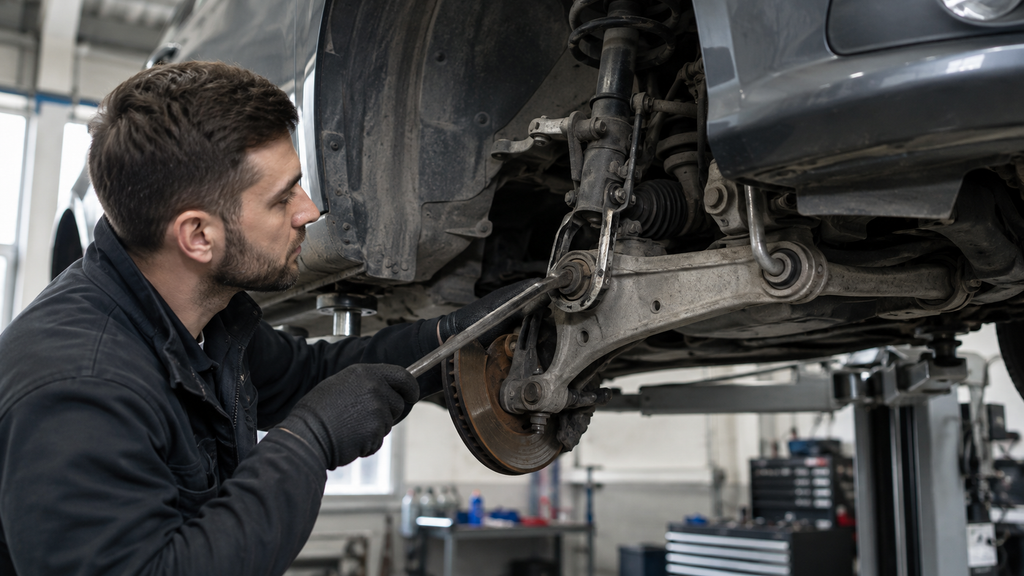
After driving over a small pothole, a dull knock appears at the front of the car. Most drivers immediately suspect the anti-roll-bar links, although the noise often comes from completely different components. Typical symptoms of control-arm bushing knock include changes in vehicle behaviour under load, dull impacts on uneven roads, and slight movement of the arm as the suspension works. These symptoms can easily be confused with worn shock absorbers or anti-roll-bar links, so a superficial inspection does not always reveal the true cause.
Different suspension faults produce different symptoms
An anti-roll-bar link works mainly when the body rolls from side to side. Bushings and the ball joint perform a different task: they hold the control arm in the correct position and allow it to move only within the range intended by the suspension design.
The rubber-metal bushing absorbs vibration and loads from the road surface. The ball joint provides a movable connection between the control arm and the steering knuckle, allowing the wheel to turn without unnecessary resistance.
When these parts wear out, the vehicle behaves differently from one with faulty anti-roll-bar links. Instead of a light rattling noise, the driver is more likely to hear a dull knock, feel a slight shift in the front of the body, or notice reduced steering precision.
When the fault is easiest to notice
The first symptoms usually appear not on a smooth road but when the load on the suspension changes. A dull knock may occur after driving over potholes, asphalt joints, speed bumps, or during hard braking.
Another common example is a car that drives quietly on a smooth road but produces a brief knock when entering a corner or crossing an uneven surface. This is often how suspension knocking in corners appears when the load on the control arm changes abruptly.
A worn ball joint behaves differently. A small amount of play appears first and gradually increases. As a result, steering precision may deteriorate and the vehicle may respond less confidently to changes in direction.
Inspection on a lift reveals hidden defects
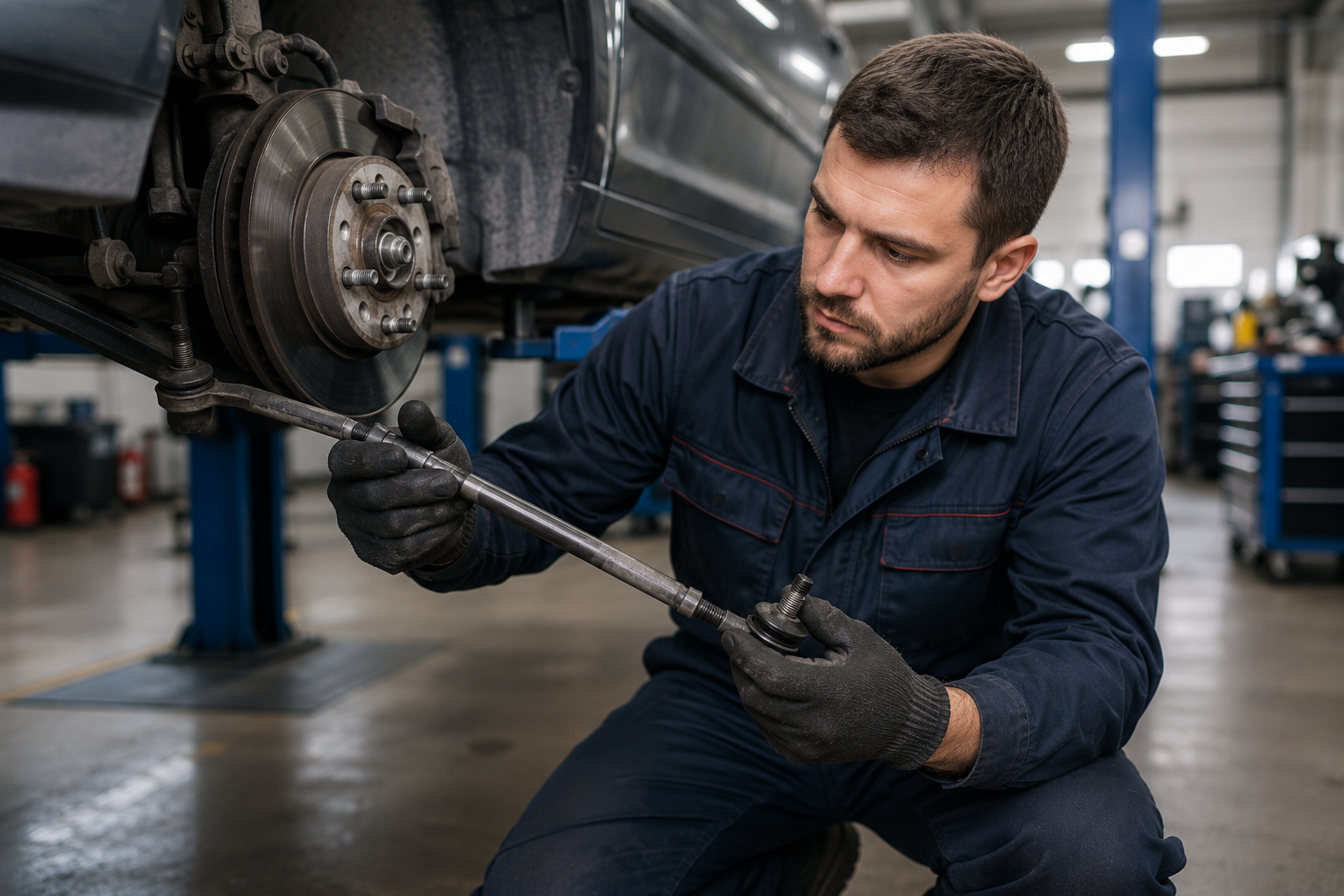
A visual inspection of a vehicle standing on its wheels does not always show the true condition of the joints. For this reason, suspension diagnostics on a lift is considered one of the most effective inspection methods. Once the suspension is unloaded, each component can be assessed individually.
Particular attention is paid to:
- the condition of rubber-metal bushings;
- the position of the control arm relative to the subframe;
- the integrity of the ball-joint dust boot;
- movement at connection points;
- wheel behaviour during a play test.
Rocking the wheel sometimes reveals no obvious abnormality even though the knock remains while driving. In this case, the control arm is additionally loaded with a pry bar or a special tool. Under working load, a damaged rubber-metal bushing behaves differently, making a hidden defect much easier to identify.
When the wheel moves during a play check, the cause is not limited to a faulty wheel bearing. Similar movement often indicates excessive play in the ball joint or a failed bushing. The main signs of ball-joint play include unwanted movement of the joint, a change in wheel position under load, and reduced steering precision.
The problem is not just the unwanted noise
A dull knock is uncomfortable, but the more important consequences are related to changes in suspension geometry. With excessive play, the control arm can no longer hold the wheel in its intended position. As a result, the vehicle responds less precisely to steering input, the tyres wear faster, and the load on neighbouring components gradually increases.
After one wheel drops into a deep pothole or strikes a high kerb, the driver may notice that the car begins to pull very slightly to one side. Even a small change in behaviour can indicate damage to a bushing or ball joint, although the knocking may still be barely noticeable during normal driving.
Delaying replacement increases repair costs
A damaged rubber-metal bushing does not regain its properties, while play in the ball joint gradually increases. Delaying repairs accelerates wear of adjacent suspension components and worsens vehicle handling.
When searching for information about control-arm bushing replacement, drivers are often interested in the price of the work. It depends on the suspension design, the way the parts are installed, whether the control arm must be removed, and whether wheel alignment is required afterward.
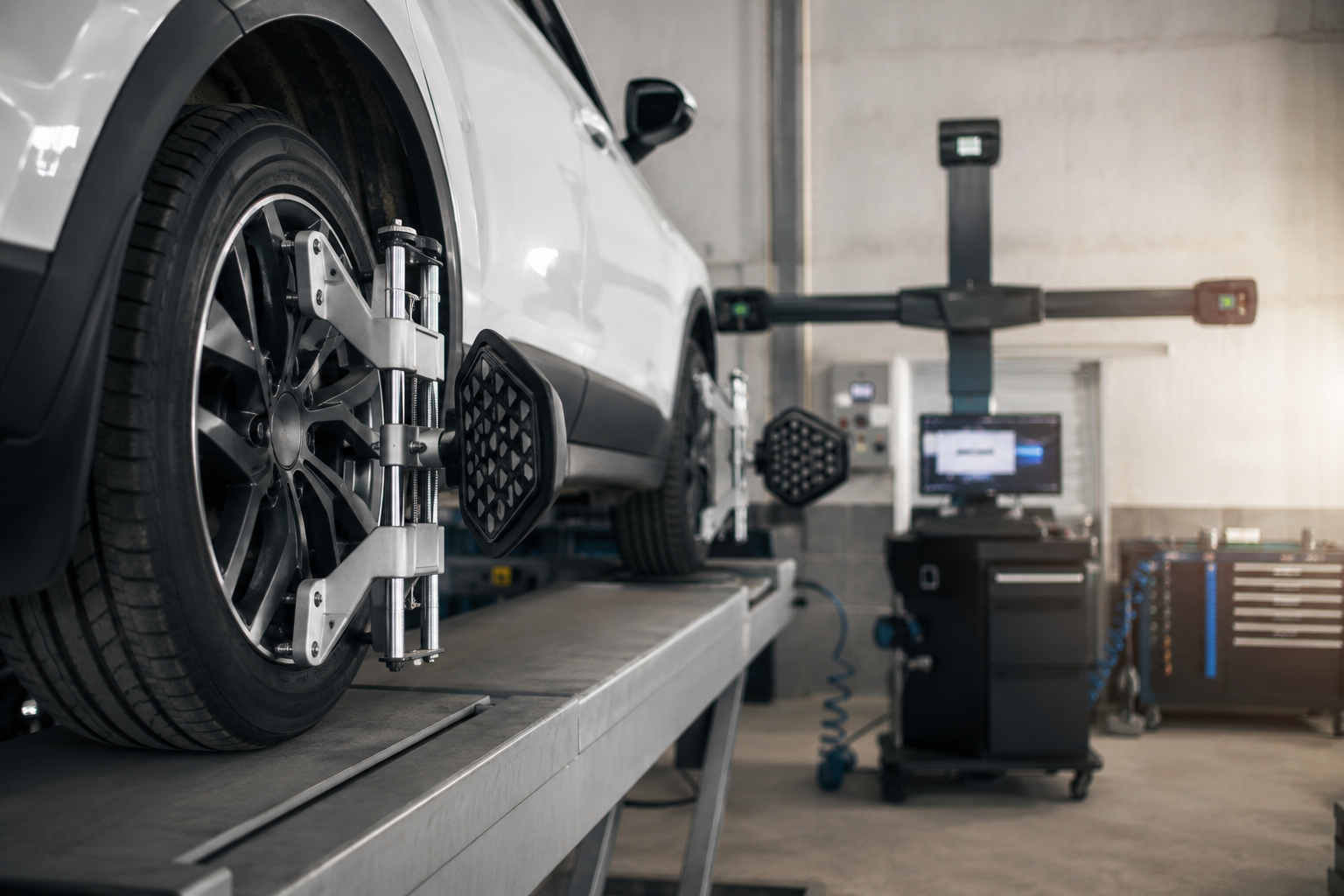
After replacing bushings or a control arm, a wheel-alignment check is often recommended. Even a small change in component position can affect suspension geometry, so checking the wheel angles helps maintain correct handling and prevent uneven tyre wear.
Top popular news
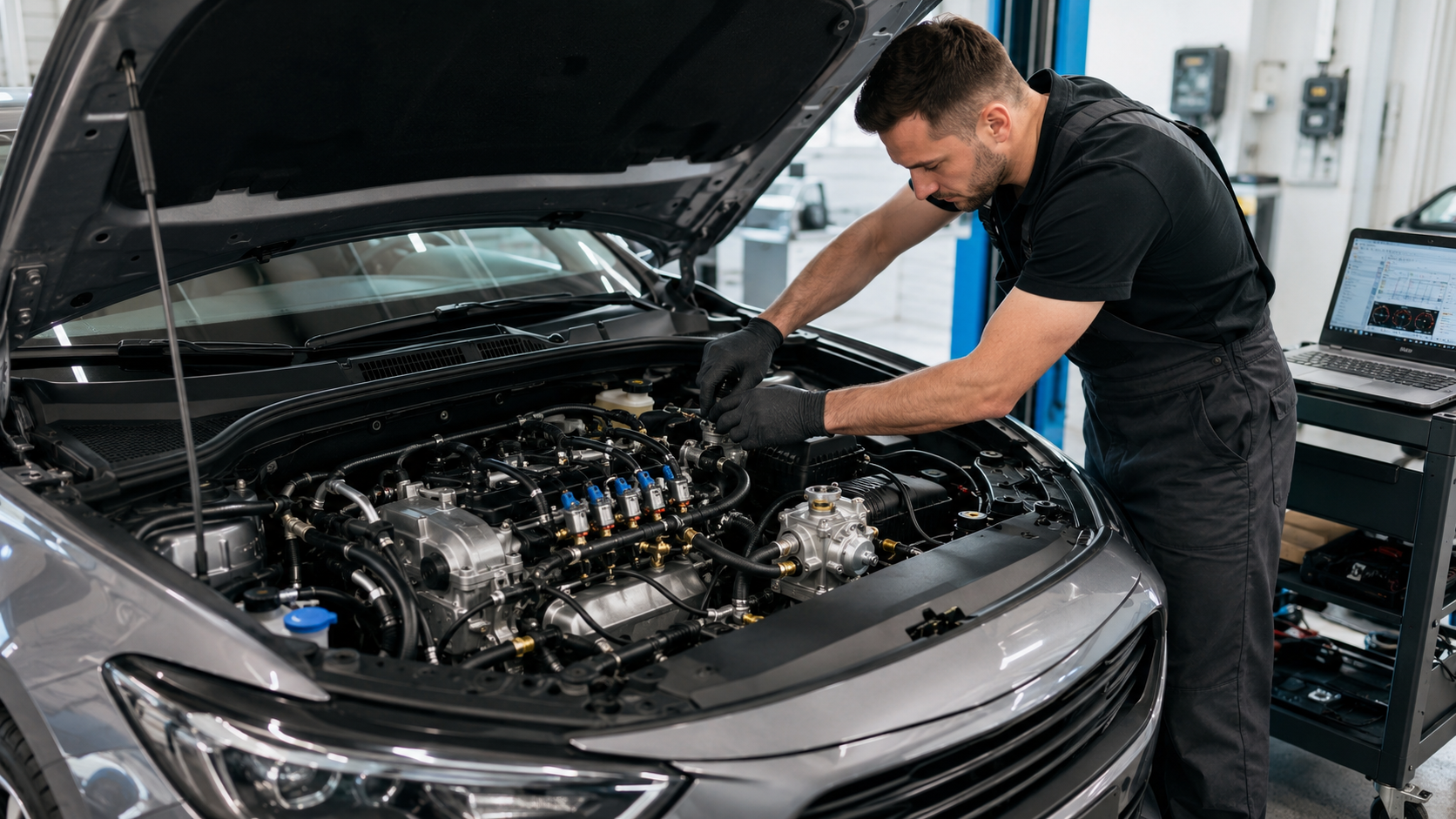
- Installing LPG on a new car: not every engine works equally well on gas
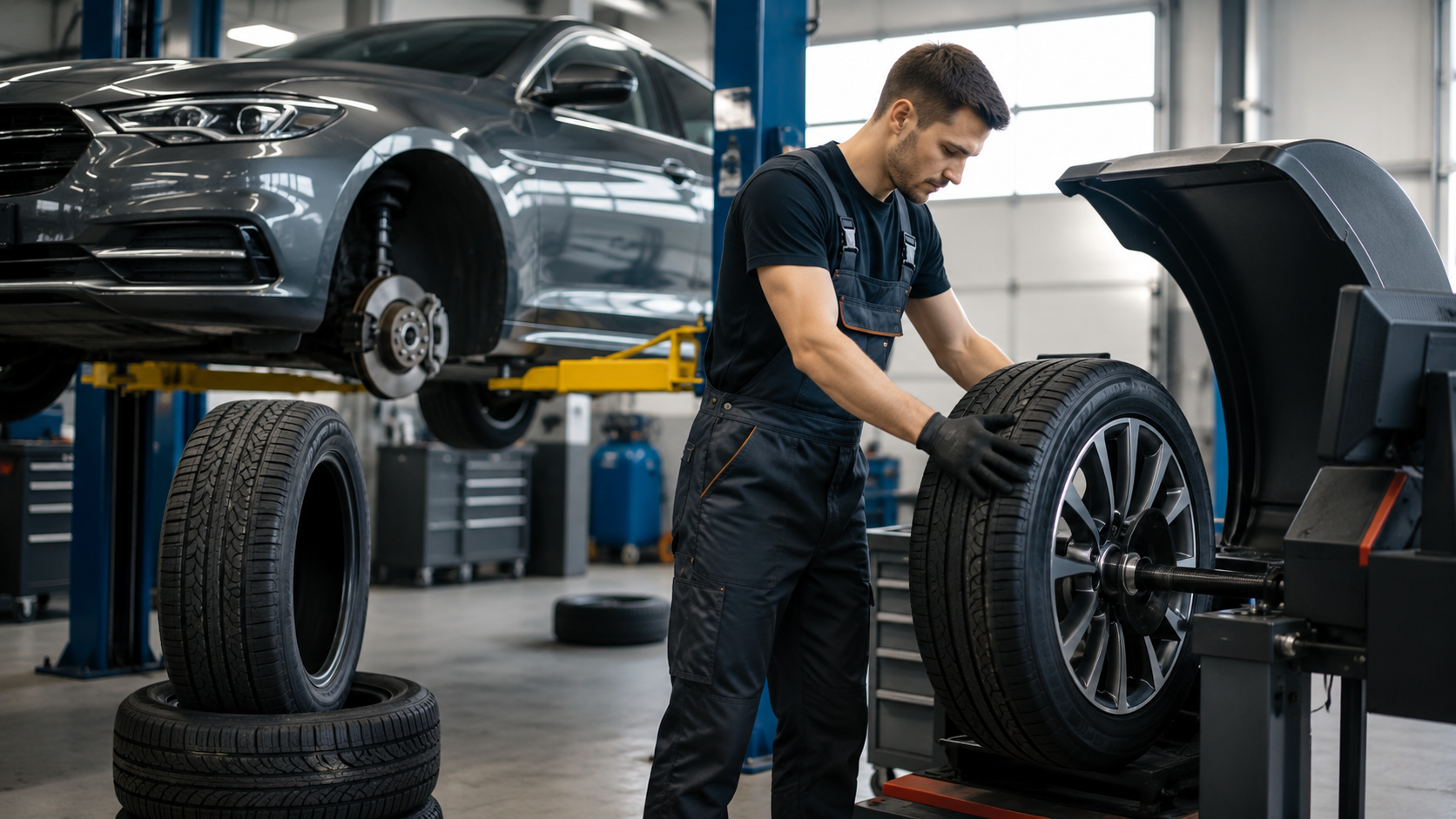
- Seasonal tyre changes: more than simply swapping wheels
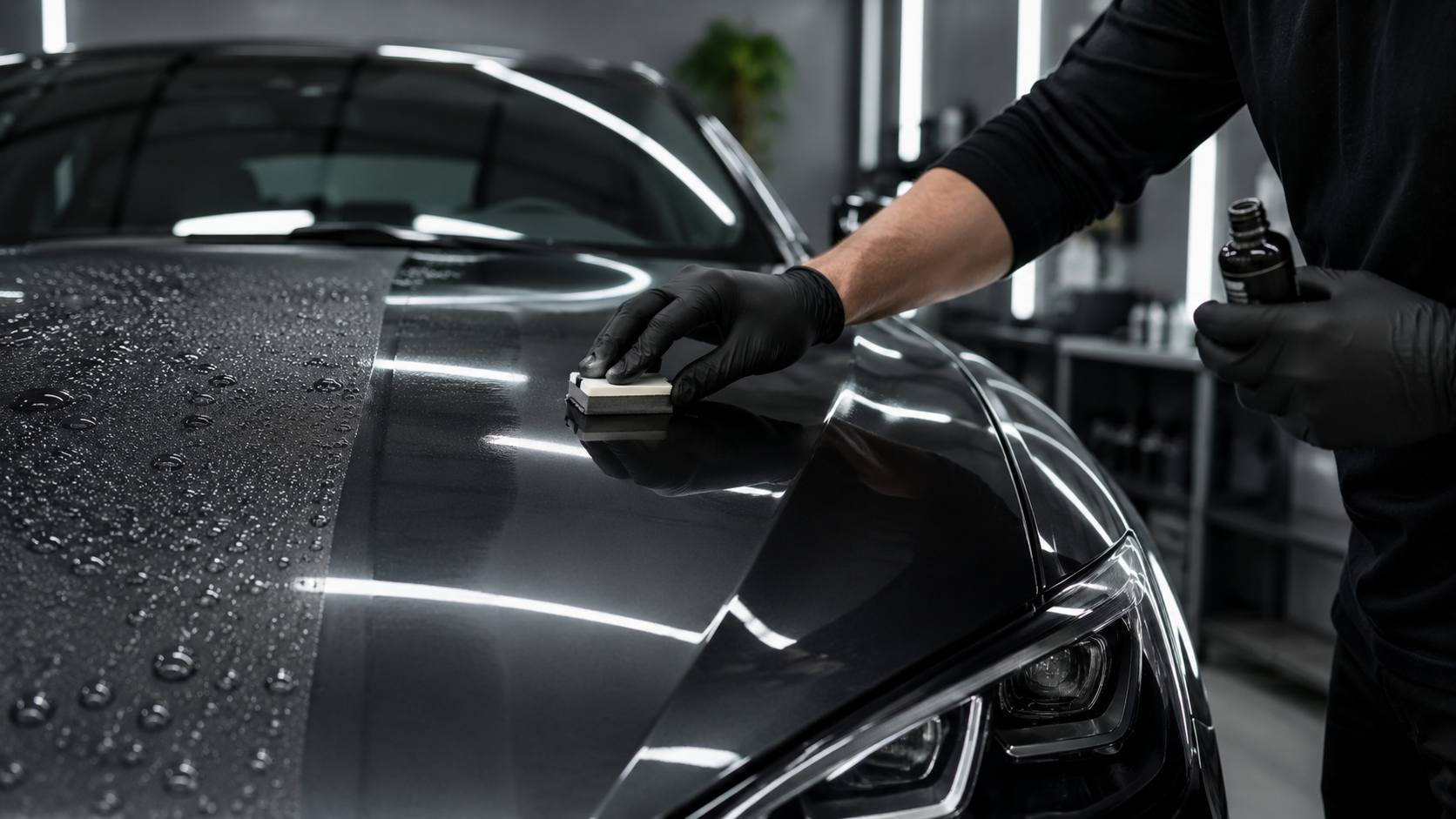
- Ceramic body coating: real capabilities without marketing myths
- Charging an electric car at home: requirements to consider before buying
- Electronic parking brake will not release: what to do when the vehicle is stuck
- Finding a short circuit in vehicle wiring without dismantling half the car
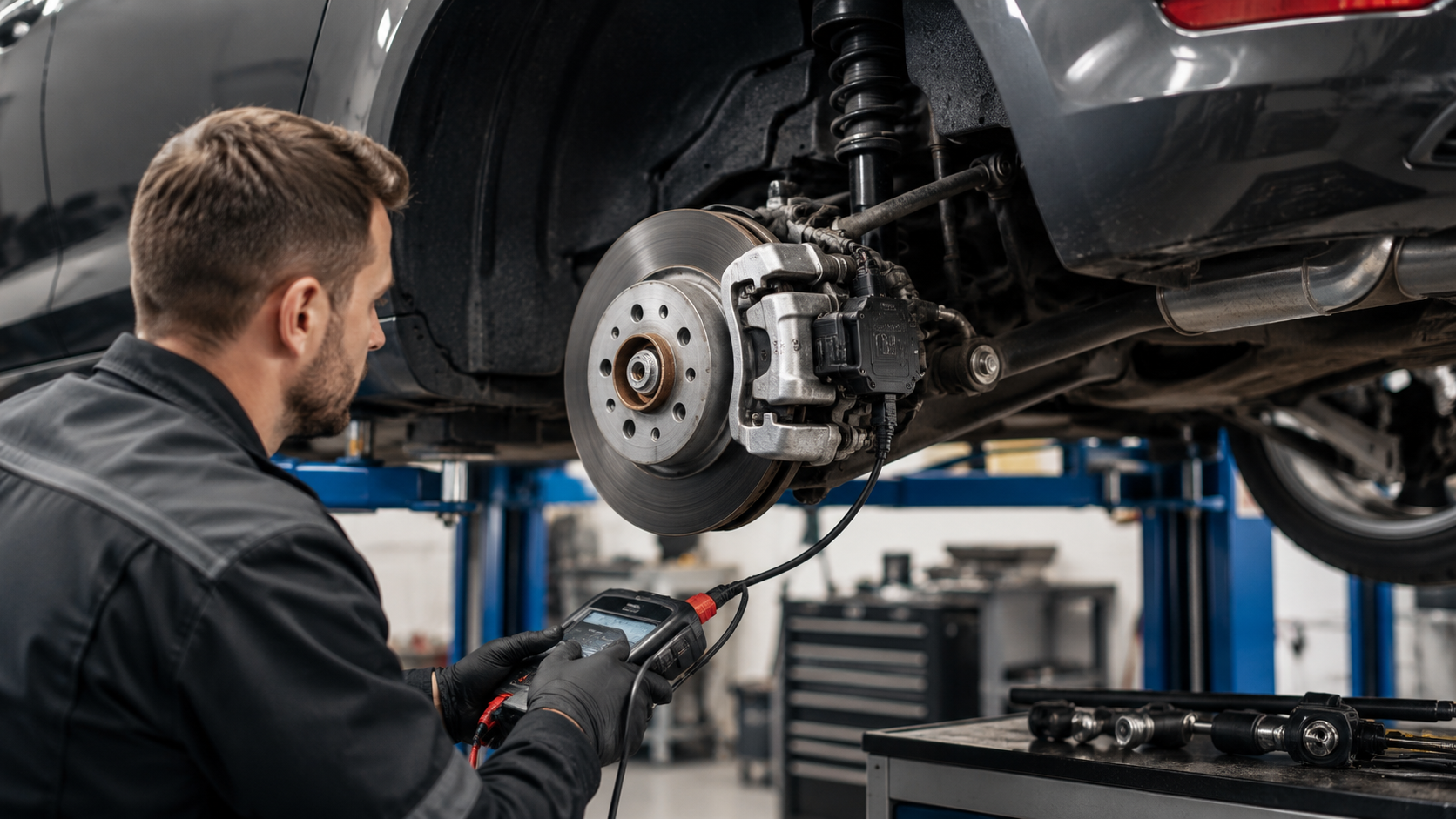
- Starter does not crank the engine: causes you can identify before visiting a workshop
- A/C compressor seizure: warning signs that should not be ignored

Subscribe to our newsletter!
To stay updated with the latest news
Related services


Book a service