Daily with | 08:00 - 20:00


Find

Contact us

Kyiv
st. Garmatnaya, 3
 Мережа СТО в місті

Kyiv
st. Garmatnaya, 3
 Мережа СТО в місті

 Години роботи
 Daily with
08:00 - 20:00
Starter does not crank the engine: causes you can identify before visiting a workshop
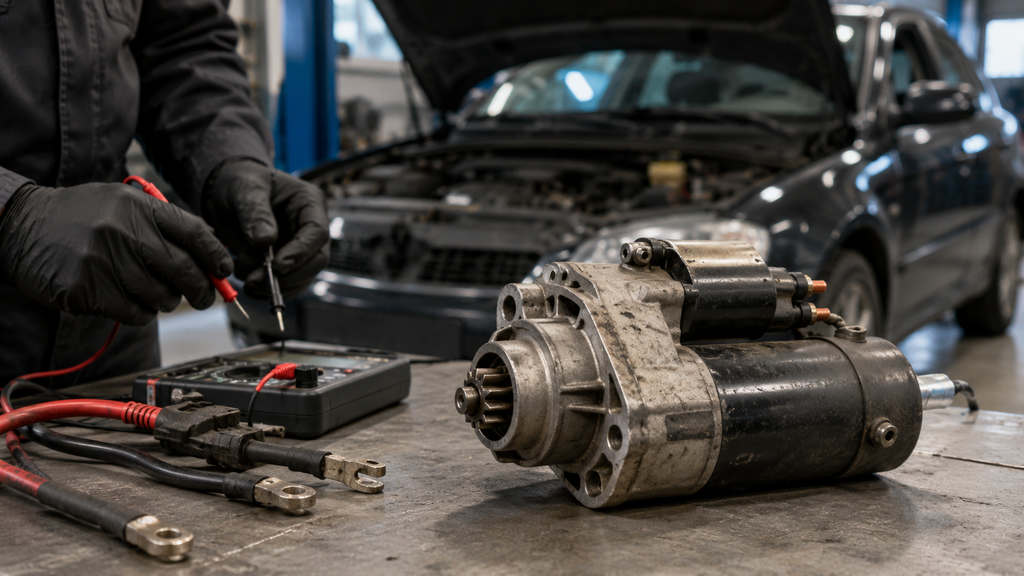
The car will not start, and all you hear under the bonnet is a single click — or complete silence. In this situation, many drivers immediately suspect a faulty starter, although the source of the problem is often much simpler. The vehicle’s first reaction can already give a rough indication of where to look: the battery, the starting system, or the electrical connections. This approach helps avoid replacing serviceable parts unnecessarily and makes it easier to choose the next diagnostic step.
Silence, clicking, or slow cranking: what the car is telling you
After turning the key or pressing the start button, the vehicle usually behaves in one of several ways:
- complete silence;
- one or several clicks;
- slow crankshaft rotation;
- fast spinning without cranking the engine.
Complete silence is most often associated with a lack of power, a break in the wiring, a faulty ignition switch, or a defective starter solenoid. One loud click means that the start command has been received, but the electric motor has not begun to turn.
A situation where the starter clicks but does not crank the engine is usually caused by insufficient starting current, a faulty starter solenoid, severe contact oxidation, or wear of internal starter components.
Slow crankshaft rotation more often indicates voltage loss in the high-current circuit or a weak battery charge. By contrast, fast spinning without actually turning the engine often points to a problem with the starter drive, or Bendix.
The nature of these symptoms makes it easier to understand whether the starter does not crank the engine: the causes are related to the battery, the starting mechanism, or the wiring.
How to assess the battery quickly
Even without a multimeter, it is possible to determine whether the battery has enough energy to start the engine.
First, pay attention to the following signs:
- the headlights dim sharply during starting;
- the instrument-panel illumination almost goes out;
- the central locking operates more slowly;
- the power windows move with a delay;
- the horn sounds weaker.
After standing overnight, the starter may only click, yet the engine starts easily once jump leads are connected. In most cases, this points to a discharged battery or a significant voltage drop rather than a fault in the starter itself.
The battery terminals should also be inspected. A white or greenish deposit increases electrical resistance and restricts current flow. Slow engine starting, intermittent faults, and unstable electrical-system operation can indicate poor contact at the battery terminals. This is why the problem is often mistakenly blamed on the starter, even though cleaning the contacts and restoring a reliable connection may be enough.
Signs that indicate a starter fault
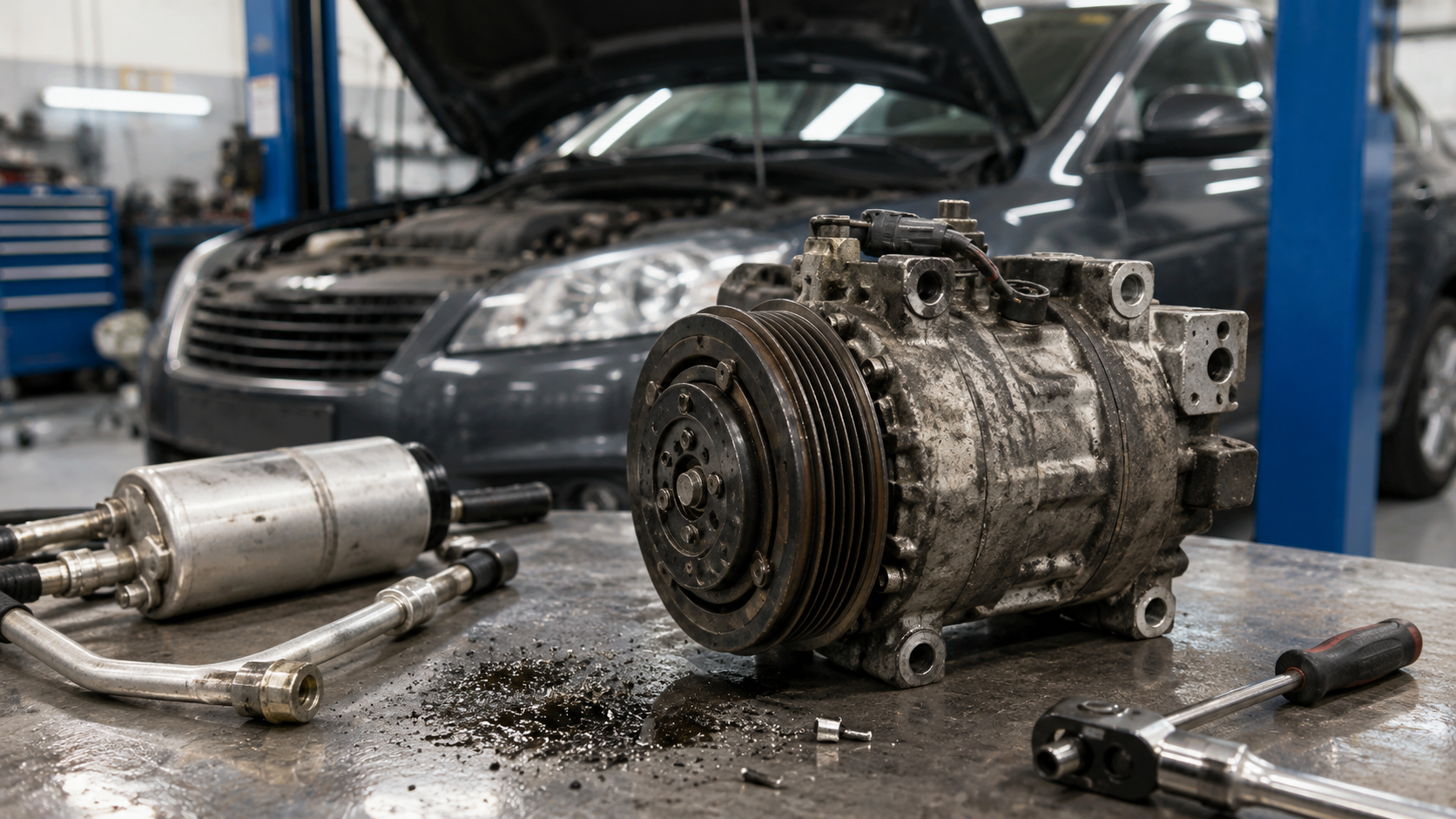
If the battery is charged and the high-current connections show no visible damage, attention should shift to the starter assembly itself. The most common failures involve the starter solenoid, starter brushes, Bendix drive, or starter solenoid mechanism. Each fault behaves differently, so careful observation can narrow down the possible causes.
A faulty starter solenoid is often accompanied by one distinct click with no subsequent electric-motor rotation. In this case, the start command is received, but the high-current contacts do not close, or the solenoid can no longer move the Bendix into its working position.
Worn starter brushes often cause intermittent operation. The engine may start normally one time, while the next attempt results in complete failure. A faulty Bendix behaves differently: the electric motor spins, but torque is not transmitted to the flywheel, so the engine does not start.
A hidden cause is often overlooked
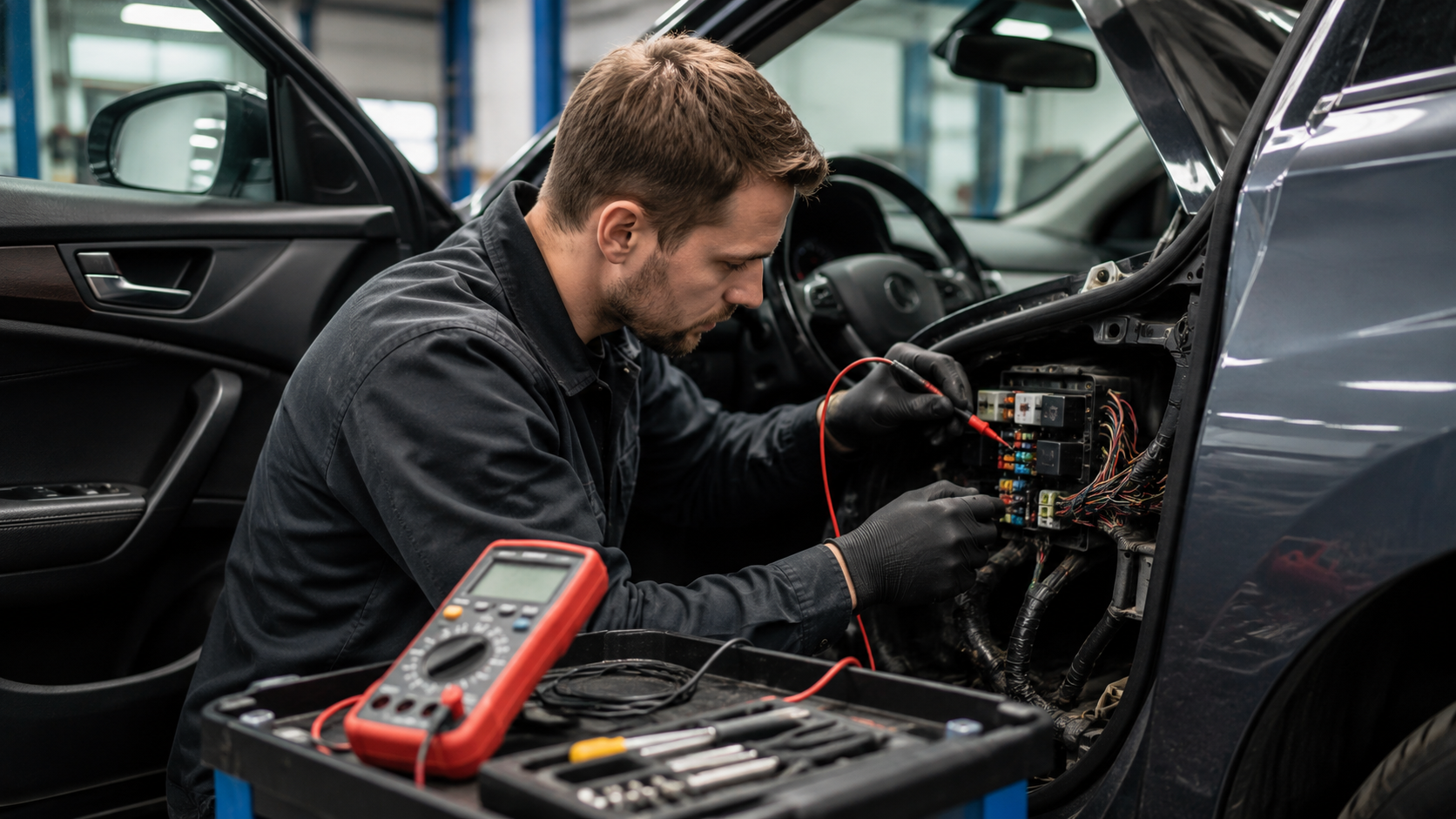
Even a serviceable starter will not work correctly if there is a large current loss in the electrical circuit. One of the most common causes is a poor chassis ground or contaminated electrical contacts.
Increased resistance can result from corrosion, loose cable connections, or oxidized terminals. This reduces the available starting current, and the voltage reaching the starter is no longer sufficient for normal engine cranking.
Before removing the starter, it is enough to check:
- the negative battery terminal;
- the chassis ground connection;
- the starter power cable;
- the starter-solenoid contacts;
- the condition of threaded connections.
This inspection takes little time but can often reveal the actual cause without expensive repairs.
Repair the starter or install a new one
Before choosing a repair method, the cause of the fault and the condition of the main starter components must be established. In many cases, replacing individual parts such as the brushes, starter solenoid, or Bendix is enough for the starter to continue operating without the need for a complete new unit.
Vehicle owners often ask which is cheaper — starter repair or replacement. The answer depends on the condition of the armature, windings, housing, and the number of damaged components. With minor wear, repair is usually more economical. If several faults are present or the unit has already accumulated considerable service life, installing a new starter may be the more practical solution.
The cost of starter diagnostics in Kyiv depends on the testing method, vehicle design, access to the unit, and the amount of work required. The difficulty of locating the fault may also affect the time needed for diagnostics. Timely diagnosis helps identify the cause at an early stage and avoid much greater expense in the future.
Top popular news
- LPG Tank Inspection: Service Life and Safe Operation
- How Many Times Can You Polish a Car Body: What Determines the Service Life of the Clear Coat
- Paintless Dent Repair: Which Defects Are Suitable for PDR
- Installing LPG on a new car: not every engine works equally well on gas
- Seasonal tyre changes: more than simply swapping wheels
- Ceramic body coating: real capabilities without marketing myths
- Charging an electric car at home: requirements to consider before buying
- Electronic parking brake will not release: what to do when the vehicle is stuck

Subscribe to our newsletter!
To stay updated with the latest news
Related services


Book a service