Daily with | 08:00 - 20:00


Find

Contact us

Kyiv
st. Garmatnaya, 3
 Мережа СТО в місті

Kyiv
st. Garmatnaya, 3
 Мережа СТО в місті

 Години роботи
 Daily with
08:00 - 20:00
Electric Vehicle Suspension: What Makes It Different?
Many drivers are surprised to learn that a modern compact electric vehicle can weigh almost as much as a gasoline or diesel crossover. The main reason is the vehicle’s battery pack, which adds several hundred kilograms to the overall weight. At the same time, the battery is mounted low in the floor, lowering the vehicle’s center of gravity. This improves cornering stability but also forces suspension components to operate under significantly higher loads. That is why electric vehicle suspension differs not only in its design and tuning but also in the higher demands placed on diagnostics, repairs, and component selection.
The Biggest Challenge for the Suspension Is Battery Weight
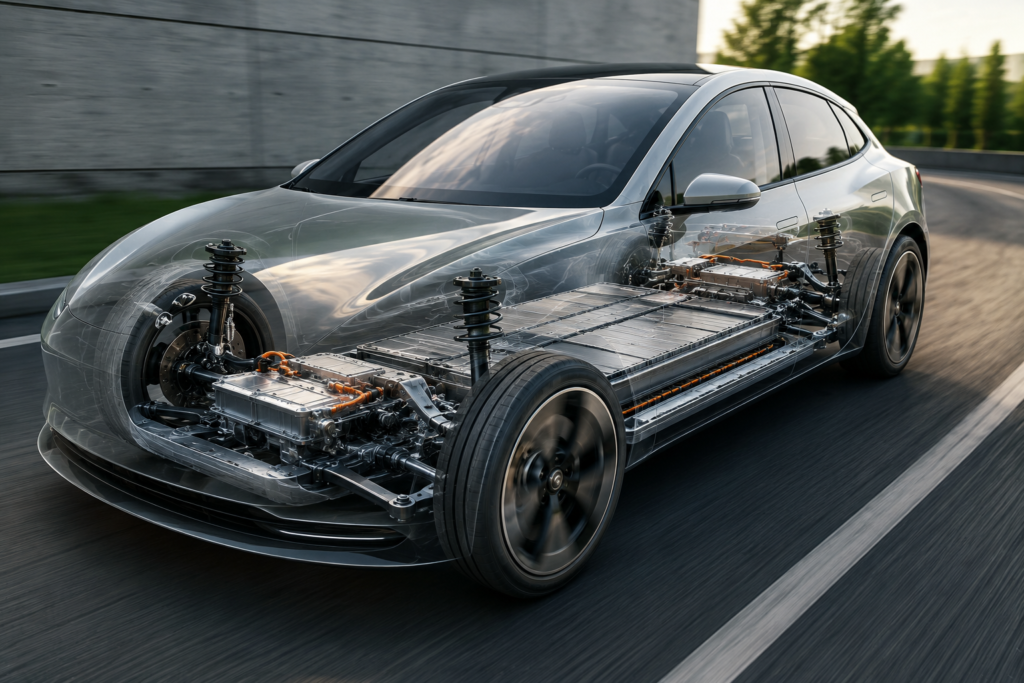
Every bump in the road creates an impact load on the suspension. The heavier the vehicle, the greater the forces absorbed by its suspension components. As a result, control arms, ball joints, shock absorbers, springs, and rubber bushings operate under more demanding conditions than those in comparable vehicles equipped with internal combustion engines.
Additional mechanical stress occurs not only when driving over potholes. It also increases during hard braking, rapid acceleration, and cornering. Because of the vehicle’s greater mass and inertia, even normal city driving gradually reduces the service life of suspension components.
The parts that usually wear out first include:
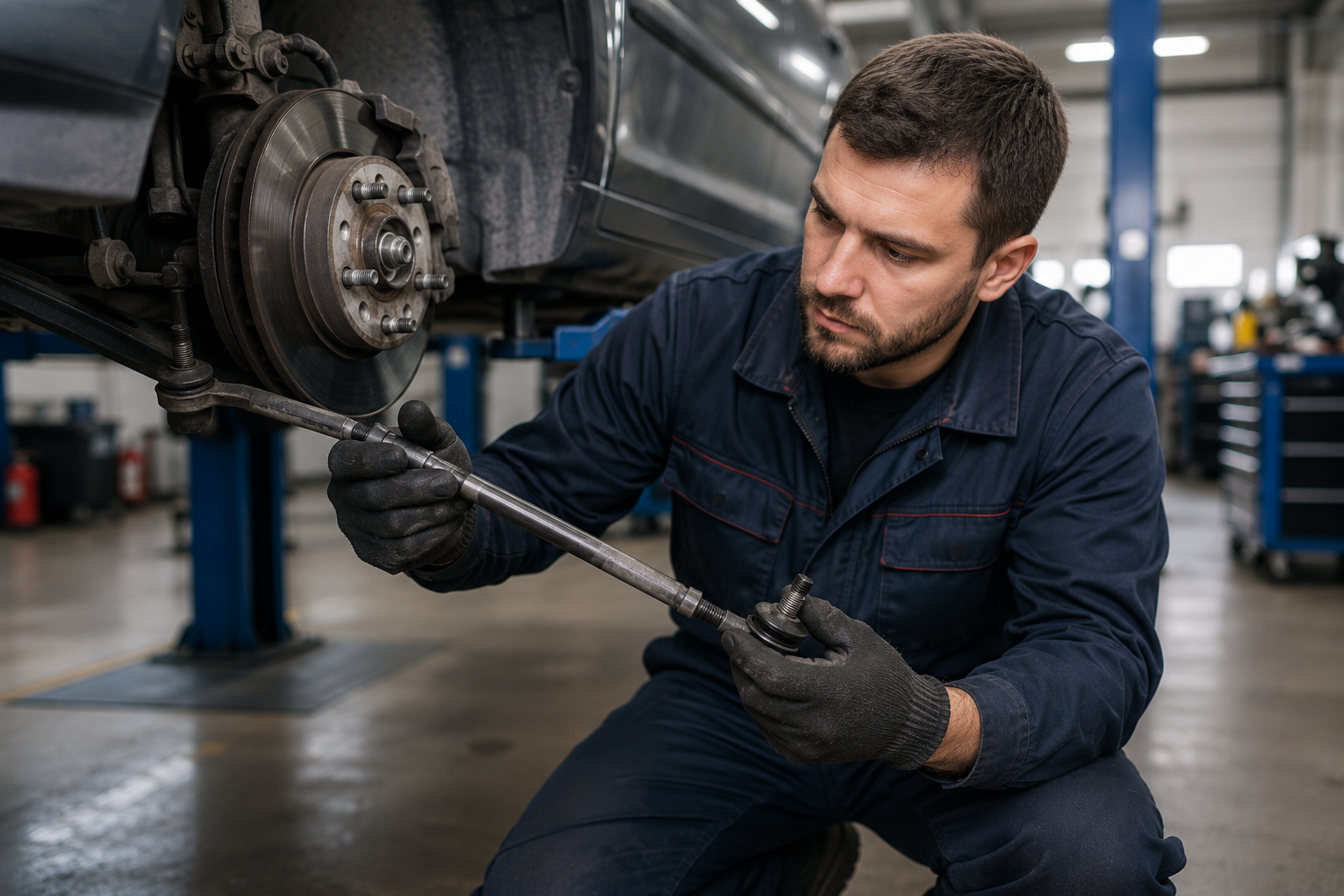
- control arm bushings;
- ball joints;
- shock absorbers;
- strut mount bearings;
- sway bar bushings and sway bar links.
For this reason, suspension bushings in electric vehicles often wear out sooner than those in comparable gasoline-powered models. Their lifespan depends on vehicle design, driving style, road conditions, and regular maintenance.
How Instant Torque Affects the Suspension
Another distinctive feature of electric vehicles is their instant torque, which is available almost immediately from the electric motor. Unlike internal combustion engines, where torque builds gradually, an electric motor delivers maximum pulling force to the wheels almost instantly.
At that moment, the rubber bushings are subjected not only to compression but also to twisting forces. Continuous exposure to these alternating loads accelerates rubber aging and may eventually cause microscopic cracks. That is why many owners wonder why electric vehicle suspension wears out more quickly. The main reasons are the combination of heavy battery weight, increased axle loads, and the immediate transfer of torque to the wheels.
To compensate for these additional loads, manufacturers often install reinforced suspension control arms, stiffer springs, and shock absorbers with higher damping characteristics. Installing suspension components designed for a gasoline version, unless they are officially approved as interchangeable by the manufacturer, may shorten suspension life and lead to repeated repairs.
What Makes Suspension Diagnostics Different?
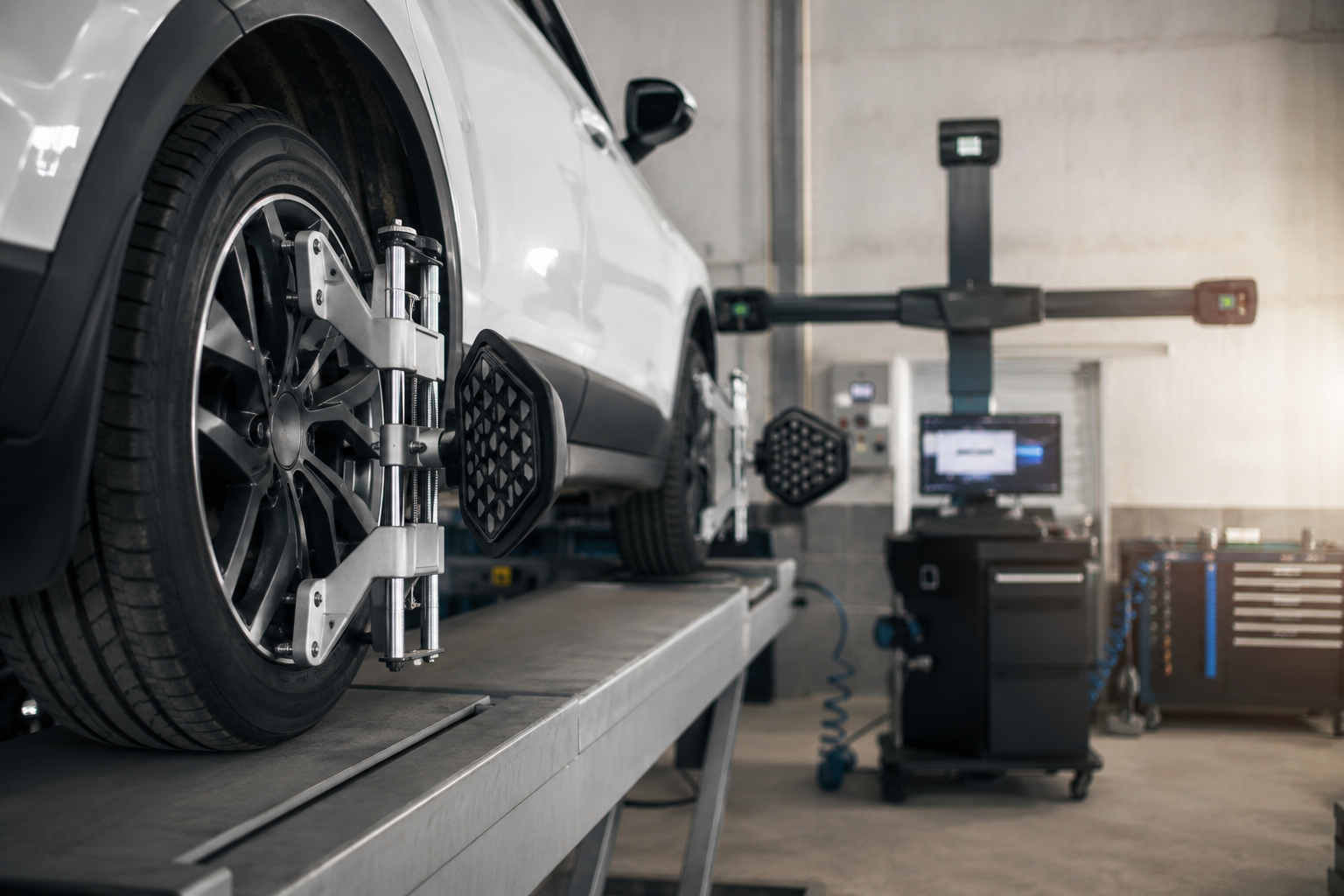
Professional electric vehicle suspension diagnostics in Kyiv involve much more than checking for excessive play. During the inspection, technicians evaluate the condition of bushings, ball joints, control arms, shock absorbers, springs, suspension mounting points, and overall ride height. Even minor wear in one component can gradually increase stress on neighboring parts.
If the vehicle is equipped with an air suspension system, technicians also inspect the air springs, compressor, air lines, and system sealing. Even a small air leak can alter ride height, reduce handling stability, and accelerate wear of other suspension components.
During repairs, it is important to use components recommended by the vehicle manufacturer. Proper electric vehicle suspension repair involves not only fixing the immediate problem but also installing parts specifically engineered for the weight and performance characteristics of that particular model.
Why the Suspension Should Be Inspected More Frequently
Because electric vehicles have a higher curb weight, even minor suspension play gradually increases stress on surrounding components. A worn control arm bushing accelerates wear of the control arm itself, the ball joint, the shock absorber, and many other suspension parts. If repairs are delayed, a small localized problem can quickly develop into a much larger one.
Electric vehicle owners should have the suspension inspected during every scheduled maintenance visit or approximately every 10,000 kilometers, especially if the vehicle is frequently driven on rough or uneven roads.
Regular suspension inspections are not simply preventive maintenance for a single component. They help prevent a chain reaction of premature wear throughout the suspension system. Detecting excessive play early helps avoid overloading neighboring parts, preserves proper suspension geometry, maintains stable vehicle handling, and significantly reduces future repair costs. This approach helps keep the suspension operating reliably throughout the vehicle’s entire service life.
Top popular news
- Car Heater Blows Cold Air: Causes of Vehicle Heating System Problems
- Interior Car Detailing: What Is Actually Included and How Often Should It Be Done
- Cloudy Headlights: When Polishing Is Enough and When Replacement Is Needed
- How Professionals Determine Whether a Body Panel Needs Full Repainting
- VAG Hidden Feature Activation: What It Is and Which Functions Can Be Unlocked
- What to Check When Inspecting a Car Imported from the USA Before Buying
- LPG System Maintenance Before the Season: What to Check to Avoid Power Loss
- Electric Vehicle Maintenance Schedule: What Needs to Be Replaced?

Subscribe to our newsletter!
To stay updated with the latest news
Related services


Book a service