Daily with | 08:00 - 20:00


Find

Contact us

Kyiv
st. Garmatnaya, 3
 Мережа СТО в місті

Kyiv
st. Garmatnaya, 3
 Мережа СТО в місті

 Години роботи
 Daily with
08:00 - 20:00
A/C compressor seizure: warning signs that should not be ignored
The air conditioner may still cool the cabin properly, but a dull hum or a brief metallic grinding noise suddenly appears when it is switched on. Many drivers attribute this to low refrigerant and immediately plan a recharge. Such a sound can indeed accompany a refrigerant leak, but it often means that the internal mechanism is already operating with excessive friction. In this situation, adding refrigerant does not eliminate the source of the fault. Signs that the A/C compressor is starting to seize are usually noticeable before the unit stops working completely. Detecting the first changes in its operation can prevent more serious damage and unnecessary expense.
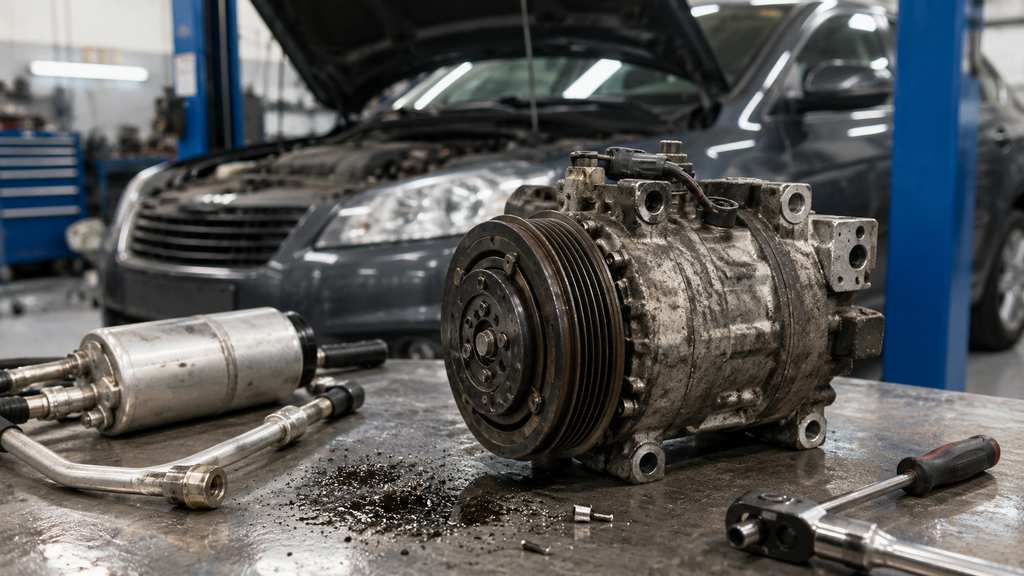
How the compressor works and why it is expensive
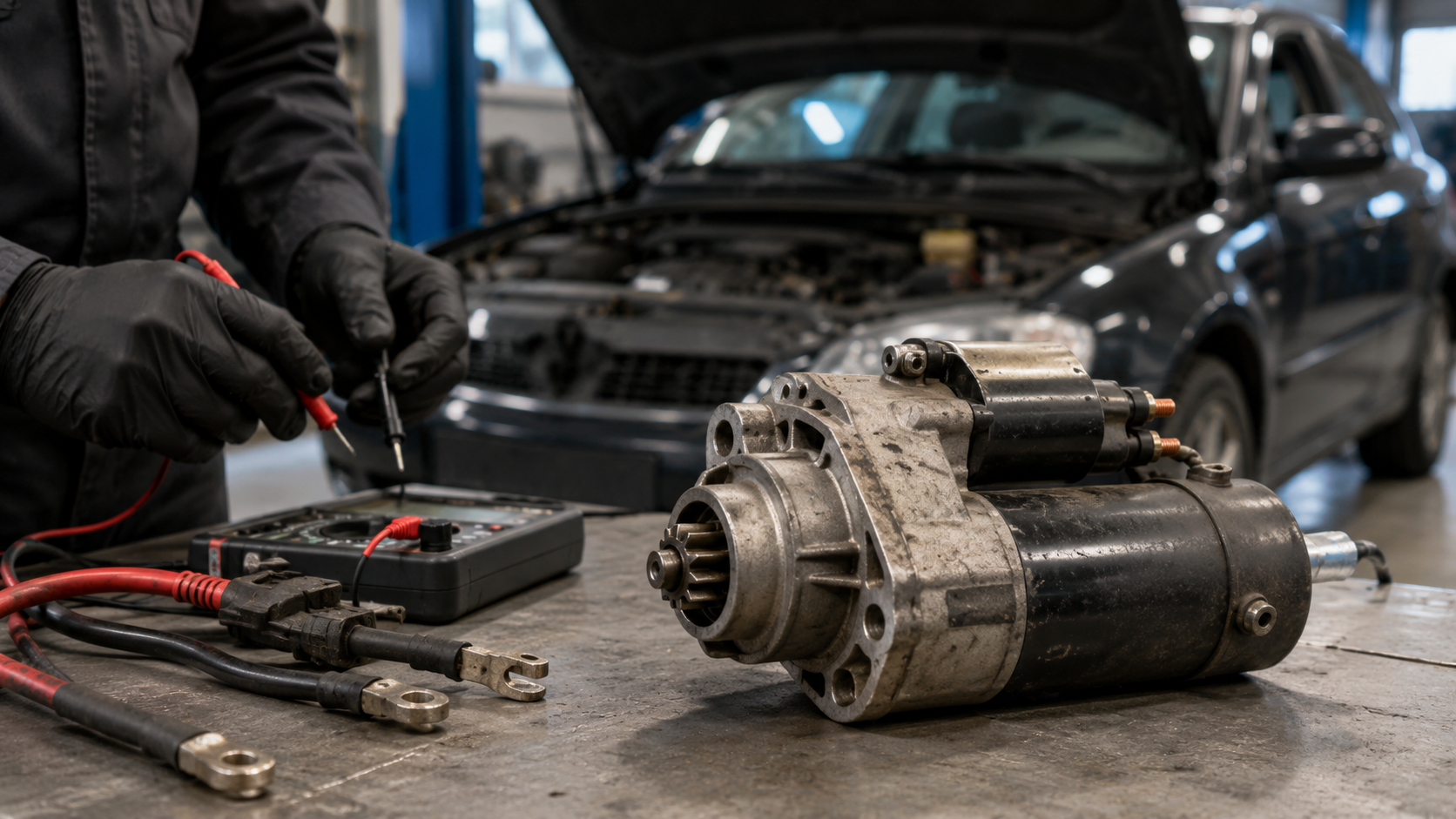
The compressor creates the pressure required to circulate refrigerant between the high- and low-pressure sides of the system. Rotation is transmitted through the compressor pulley, while the electromagnetic clutch engages the drive only after the air conditioner is switched on. Inside the unit, components move continuously, and their manufacturing tolerances are measured in fractions of a millimetre.
PAG compressor oil is not stored in a separate reservoir. It is carried by the flow of R134a or R1234yf refrigerant and continuously coats the friction surfaces with a thin protective film. A reduction in refrigerant charge also means poorer lubrication, causing the temperature inside the mechanism to rise rapidly.
The high cost of this unit is not explained by its complex design alone. Damage to internal components is often accompanied by contamination of the entire circuit with metal particles, so repairs may extend far beyond replacing the compressor itself.
Why an A/C compressor begins to seize
Gradual wear almost always starts when operating conditions deteriorate. The highest load occurs when there is no longer enough lubricant to maintain a protective film between moving components.
The main causes include:
- a refrigerant leak;
- insufficient PAG oil;
- a contaminated receiver-drier;
- moisture entering the lines;
- incorrect system pressure;
- prolonged operation with a worn bearing or clutch.
Vehicle owners often ask why the A/C compressor seized. In most cases, the fault develops gradually. First the lubricating film breaks down, then friction increases, scoring appears on the surfaces, and eventually the moving parts begin to bind.
Recharging the system is effective only as long as the internal mechanism has not suffered mechanical damage. Humming, grinding, or vibration indicates that the problem is no longer limited to a shortage of refrigerant.
The first signs of a serious fault
Complete seizure almost never occurs without warning. First the sound of the air conditioner changes, then vibration appears, and eventually cooling performance deteriorates. At this stage the unit may still operate, but every activation accelerates its wear.
Possible signs of a fault include:
- humming after the air conditioner is switched on;
- metallic grinding near the pulley;
- squealing from the drive belt;
- uneven compressor clutch operation;
- vibration at idle;
- intermittent loss of cold air.
A fairly common situation is a brief metallic sound immediately after the first activation that disappears after a few minutes. Many drivers postpone diagnostics because the air conditioner continues to cool the cabin. During this time, the internal surfaces may already be operating with almost no lubricating film, so the rate of wear increases rapidly.
When the A/C compressor is noisy, the causes are not always related to damage inside the compressor itself. The source of the noise may be the pulley bearing or the electromagnetic clutch. A metallic grinding sound that becomes louder day by day is much more likely to indicate damage to moving components inside the unit.
Once the compressor seizes, the entire system becomes contaminated
When internal parts break down, fine metal particles mix with the refrigerant and circulate throughout the circuit. Metal debris in the A/C system after compressor failure settles in the lines, condenser, evaporator, valves, and other components. As a result, installing a new compressor without cleaning the system often leads to another failure.
A complete repair procedure includes:
- flushing the pipes and refrigerant lines;
- replacing the receiver-drier;
- cleaning or replacing contaminated components;
- evacuating the system;
- charging the correct amount of refrigerant and PAG oil.
Saving money on circuit cleaning often means that the new compressor begins operating in a contaminated environment, while residual metal particles damage its internal surfaces again.
When clutch replacement is enough and when a new compressor is required
Not every unusual sound means critical compressor damage. A worn bearing, faulty electromagnetic clutch, or damaged pulley can often be repaired separately. In such cases, an A/C compressor clutch replacement may be sufficient to restore normal system operation completely.
If metal debris, deep scoring, housing overheating, or complete jamming of moving parts is present, replacing individual components is no longer enough. A new compressor must be installed together with comprehensive cleaning of the entire circuit.
The final cost of repairing a vehicle’s A/C compressor depends on the condition of the unit, the nature of the fault, and the scope of work required, from replacing individual parts to flushing the system and installing a new receiver-drier. Addressing the problem at an early stage is almost always less expensive than repairing the system after complete compressor seizure.
Top popular news
- LPG Tank Inspection: Service Life and Safe Operation
- How Many Times Can You Polish a Car Body: What Determines the Service Life of the Clear Coat
- Paintless Dent Repair: Which Defects Are Suitable for PDR
- Installing LPG on a new car: not every engine works equally well on gas
- Seasonal tyre changes: more than simply swapping wheels
- Ceramic body coating: real capabilities without marketing myths
- Charging an electric car at home: requirements to consider before buying
- Electronic parking brake will not release: what to do when the vehicle is stuck

Subscribe to our newsletter!
To stay updated with the latest news
Related services


Book a service